The Photo Vault: The Birthday Tradition


The interactive and informative museum on the equator

Quito, Ecuador, May 2004

As my 25th birthday approached, I started coming up with ideas of where I would be to spend my quarter of a century. As I was travelling, the options were pretty much endless. I´m not sure where the idea came from, but I decided that visiting the equator and jumping backwards and forwards from Southern Hemisphere to Northern Hemisphere and doing a tip-toe balancing act on the equator would be an awesome way to celebrate my day.

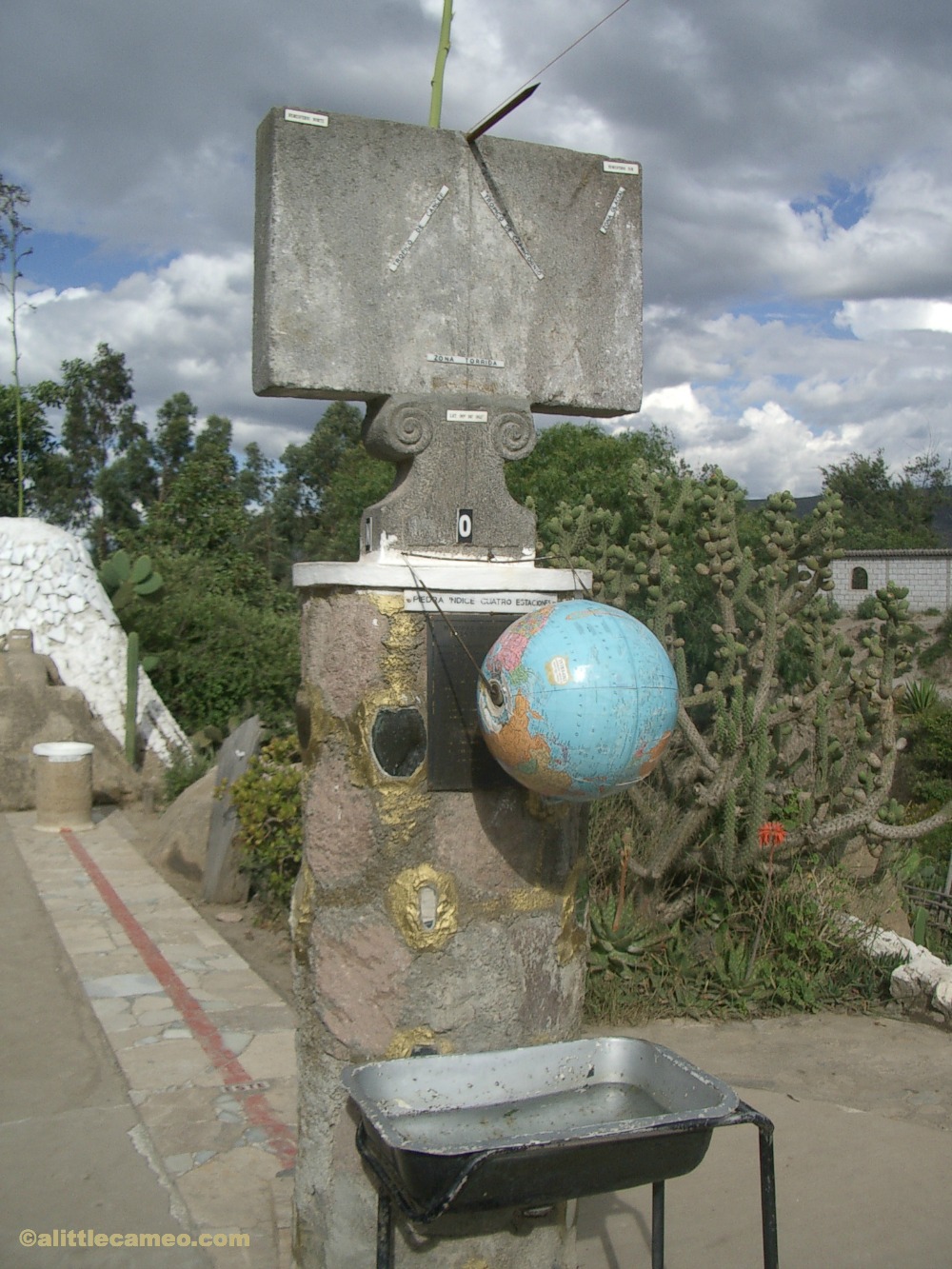
I was travelling on my own and hadn´t met anyone else at that stage who wanted to tag along to the various equator attractions in Ecuador, so I went on my own. I visited the small, interactive site which is on the actual equator and did all the cool things like balance an egg on a nail head and watch water swirl down the plugholes clockwise, anti-clockwise, and straight down (over the equator). I tried my hand at shooting a blowdart into a cactus leaf and generally had a great time.

I then went to the official equatorial monument, a large and bland site, that is just slightly off calculation and therefore not on the actual equator.

Back at the hostel I went out to dinner with some others and when they found out it was my birthday they ordered me a cake and a sparkler. It was a great day.

Ever since this birthday, I´ve always done something interesting, different, or just gotten away from it all so that I could spend my birthday doing something that would make me happy because in my early twenties, I realised that my birthday is only special to me, so rather than rely on others to make it a great day for me, I had to take it into my own hands. Since then I´ve hiked in national parks, gone parasailing and kitesurfing, rafted through the Grand Canyon, visited Angkor Wat, biked around Rottnest Island, climbed the Sydney Harbour Bridge and hit the beach in Mexico.

This year, I´m back in South America for my birthday, just over the mountains a bit from Ecuador where the birthday tradition started. So today, for my first birthday in Colombia I went tubing in the rapids of the river in Minca, not far from Santa Marta. I never really expected to start such a tradition as I stood on the equator, but I love it and I´m keen to see what exciting things I do and interesting places I go for the birthdays to come.

* If you are interested in more information about the museum at the equator, The Souls of My Shoes blogged about her recent visit and more fun activities that can be found at the equator.

The Photo Vault is where I will be sharing my favourite photos (and their stories) that deserve better than being lost in the depths of my iPhoto never to be shared.

The case of a little crash

On my way to work on the back of our motorbike today we were involved in a little scuffle with a taxi. No one was hurt, nothing was damaged, but this is what happens when you do have a little bingle.

After putting some air in the back tyre, we headed off along Carrera 19 towards Taganga, like we normally do. There is a bridge over a small river where I´ve seen people digging the silt out of the river to cart off to make bricks. This is illegal, but just the same as dumping used and broken concrete in whatever vacant lot is, it happens and most people turn a blind eye to it.

This bridge is just before a busy intersection, and what usually happens is the bridge becomes a traffic bottleneck. We hadn´t yet come to the bridge but had happened upon the traffic knotted in zero semblance of lanes. We were in the far left “lane”, next to a thin concrete median strip delineating the two directions and just before a gap in the median. We had come to a stop due to the traffic and the taxi beside us that had started to veer in our direction.

I thought the taxi would see us and stop veering, but no. While we were stopped, he turned over the top of us to do a U-turn. All of a sudden the taxi was brushing my leg and I put my hand out in front and banged on the back window because it was about to drive over the top of us.

The taxi driver stopped in the middle of the road and the turn, hopped out of his car and proceeded to start shouting at us. He said he had right of way, that he had his indicator on, that we weren´t allowed to pass on the left (last time I checked on this side of the world this is considered the fast and overtaking lane).

So mi novio started yelling back. “You didn´t even look before turning, you can´t do a U-turn here.”

Within seconds of the shouting we were surrounded by onlookers. People driving past suddenly pulled up their motorbikes and stopped to watch the argument. Colombia is a nation of sticky-beaks.

Another taxi drove by slowly and called out the window that the taxi had right of way. Other motorbike riders were throwing their two cents in saying the taxi was in the wrong. The taxi versus motorbike war had found a new site to battle on.

An unmistakable wine coloured stripe was smeared along the side of the taxi and further above that a longer black stripe that the taxi driver was claiming as our fault. Clearly the wine coloured stripe was from our bike from where the taxi had ridden over the top of us, but as mi novio tried to lean the bike away from the car, the higher black stripe was most likely not from our handlebars or bike. Needless to say, these stripes are easily removed with a slight amount of buffing and there were no permanent scratches to either our bike or the taxi.

The taxi driver wasn´t convinced, wasn´t happy and was in the mood to argue despite having passengers waiting to be delivered to their destination in the back of the taxi. He said he would call the police, although in these circumstances there is nothing the police can do; no one is hurt, nothing is damaged. The police just stand around and wait for the two parties to reach an agreement and direct traffic around the scene until such time.

As the taxi driver took down our number plate, I told mi novio to take a picture of the accident from our perspective on the bike. A photo to prove that the extent of the damage was only a washable transfer of paint and so that should the owner of the taxi come looking for us and ask us to pay for damages, we have grounds to refuse.

I´m extremely relieved that the little crash wasn´t any more serious. There are so many accidents in Santa Marta every day, and with the huge numbers of motorbikes on the streets, it isn´t surprising. Every day it is a struggle between cars, motorbikes and non-existent lane markings. Whilst we are in the motorbike camp and a motorbike is a much quicker mode of transport given that no traffic lights operate on a system giving the city good traffic flow, I do love every 10th and 25th of the month, when in Santa Marta it is dia sin moto. These are the two days each month where you can´t use your motorbike, and I relish the calm and peace in the streets.

I´m not a believer in the crack down and restrictions on motorbikes that are starting to come into effect for people, because I understand the importance of transportation in a person´s daily life and quite honestly, only a small percentage of people in Santa Marta can actually afford a car. We certainly can´t afford a car. But I do think that more efforts should be focused on making sure motorbikes have all the paperwork, including a license for the drivers, a roadworthy certificate and insurance. If all motorbikes met these requirements, I believe that the streets would be much safer, and maybe there would also be a greater respect for other road users and pedestrians.

An overwhelming lack of enthusiasm

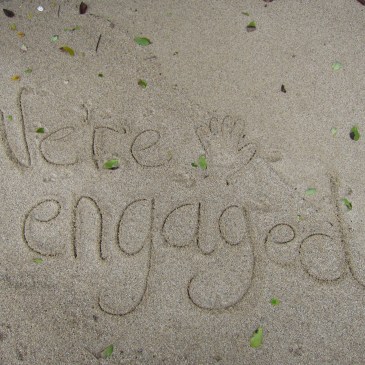
Arriving back home from our recent camping trip to Tayrona National Park full of excitement with the news that we are going to get married and with a beautiful ring on display, I was looking forward to letting my nearest and dearest, okay, everyone, know the news.

In the kitchen I asked mi novio if he was going to tell his mum sitting in the rocker in the lounge room, but he said for me to tell her. So I approached her and said “Señora, we have some exciting news. Your son asked me to marry him and I said yes!” while thrusting my left hand towards her so she could see the ring with which he had proposed.

Her response while looking at my ring was “That´s good. It´s pretty, it´s an engagement ring” and then proceeded to tell us that the recently dead Hugo Chavez was going to be embalmed and put in a crystal coffin on display in a museum in Venezuela.  Brief? Yes. Lacking in enthusiasm? Absolutely. A pin prick to my bubble of excitement? Most certainly.

Instantly I slumped in the chair, barely able to hide disappointment at such an uninterested reception to incredibly important news by the first person we´d told.

I gulped down my Coca-Cola and made a speedy dash to the bathroom for a shower where I admit to bursting into tears.

In our room mi novio found me on the bed with my head buried in a pillow and asked what was wrong. I told him that here we were with the most exciting news the house has had for the year and his mother hadn´t shown any excitement, let alone congratulated him. What a great way to feel welcomed into the family. I´m pretty sure in my distraught state I said that if that was how excited his mother and family were going to be, then we´d get married in Australia where all of my family, who I was sure would be over the moon by the news, could attend this important event in our lives.

After my outburst, I tidied myself up and then mi novio came into the room again to find me talking to myself in the mirror. He asked what I was doing, and I answered, rather suspiciously, “nothing”. Clearly it wasn´t nothing and when he asked again I said I was practicing what I would say to his mother to let her know how hurt I was feeling by her lack of reaction to our news. He told me to practice on him, and I unwillingly I relented and put forth my little speech. He asked if I was really going to say something and I told him that if I never said anything, I would always feel the stone of hurt and bitterness in my heart over her reaction. He asked if I wanted him to tell her, and I was unsure but eventually decided that it was probably best for him to broach the subject.

We went out to the lounge and sat down on opposite sides of the room. Mi novio then said “Mamá, Camille feels sad because she thinks you are not excited or happy about our news because you didn´t say anything or express your happiness.”

Her response was defensive and actually slightly argumentative, “I looked hard at the ring and it was nice. If I had have thrown a glance at it and then looked away that would have been an offense. It´s not my responsibility to ask or inquire about anything, it´s my children´s responsibility to communicate with me. I´m not going to ask questions. One doesn´t like to make comparisons, but I was thinking about your brothers and sister and how it´s nice that you´ve told me and not run off and hidden things from me.”

She proceeded to stay off the topic of our pending nuptials and instead launched into a lengthy tirade of how she wasn´t happy about how one son got married 5 months after his father died and so she only went to the church not to the reception, how another son got married in the presence of all his wife´s family and without telling any of his family, how her daughter was supposed to get married in 6 months but then suddenly upped and left the house for her fiance´s home town where a wedding was planned for in a week´s time and how she believed after seeing things on Facebook that another son had gotten married on the sly too. An interesting way of showing she was happy for being included in our celebrations and not making comparisons.

Instead of feeling the weight of sharing my feelings leave my chest, I felt berated for being so sensitive and apparently doing things the wrong way for not leaving it up to her son to tell her we were engaged.

So I told mi novio that from that point he had to tell his family. I wasn´t going to say anything because I´d probably just be disappointed by their reactions and it seems that this type of news is best coming from him than me, the foreigner.

I guess I was better prepared for the lack of enthusiasm from the rest of his family after this experience. His older brother just kind of stared at the news and his aunt (who is both his boss and my boss) just smiled dumbly. A cousin didn´t even say anything. Not once was there a felicitaciones (congratulations) said by a member of his family, except for when mi novio said to his son “Aren´t you going to congratulate us?” but I guess it´s okay to put words in a nine-year-old´s mouth.

As far as life events go, Colombians are more excited by babies and birthdays than by weddings. I´m sure that if we´d announced we were having a baby, the reaction would have been far different. In Australia, whilst many people choose never to wed or have children before getting married, there is still a strong tradition for being married before starting a family. In Colombia everyone asks when you´re going to have a baby. They´re not interested in whether you´re going to get married, just when you get pregnant.

Perhaps my views and generalisations are tainted by my experiences living on the coast. The state of Magdalena where we live is one of the four poorest states in Colombia and teen pregnancies are the norm (condoms are priced way out of reach of a huge percentage of people here) and not the same kind of big deal they are back home. As a matter of fact we are going to a baby shower today for a 17-year-old girl. Truth be told, I had expected to find a greater pressure to get married before starting a family in this Catholic country, but it seems all that matters is bringing a baby into the world, regardless of how old the mother is, or whether she is in a stable, loving relationship.

I asked the girlfriend of mi novio´s cousin why she thought I´d been met with such indifference and she said “Everyone gets divorced or separated anyway, so people don´t really think it´s worth celebrating.” I was astounded at the pessimism on a level which I hadn´t yet encountered in Colombia. However mi novio doesn´t agree with this and says it is just that more people to live together without getting married. Even his parents never got married.

Thankfully the reception to our engagement news from my parents, brothers, sister, grandparents, aunts and friends was overwhelming and effusive. Exactly as I expected it to be and like how I am when I hear exciting news of engagements, weddings and babies – with genuine happiness for the people concerned.

So whilst I had the wind knocked out of my sails, this little boat continues to navigate the choppy waters of cultural differences in search of safe harbours, crystalline water and beautiful beaches like the one where mi novio proposed to me.

Have you ever had an unexpected response to a major life event due to cultural differences?

What´s your blood type?

With my spiffy temporary resident visa all sorted out, the next step to living in Colombia is getting my cedula extranjeria.

Every Colombian is issued with a cedula (national identity card) which they are required to produce or rattle off their number for anything and everything. The cedula contains important information like name, sex, date of birth, place of birth, height and blood type. It doesn´t however contain important information like address or favourite colour.

As a foreigner living in Colombia I need a foreigner´s national identity card to produce when asked for ID, to open a bank account and for a myriad of other processes. This is in addition to my passport and visa.

Armed with a list of everything required for the cedula processing, I stumbled across a piece of information I didn´t have – my blood type.

If you ever want to see a surprised Colombian, just tell them that you don´t know your blood type. They will ask how is this possible, and what happens if you are in an accident and need blood and will expect an answer that they will still challenge.

The only two people in my family who know their blood types are my aunt who has had two kidney transplants and my grandfather who donated some blood to himself before hip surgery. Curiously, my mother who has been the recipient of a few blood transfusions with a  stint in intensive care where she was basically bleeding to death, doesn´t know her blood type.

It´s really not something that most people in Australia know, unless they are a blood donor, but it is a big talking point in our Colombian house. I can see why it is important to know your blood type here. Colombia isn´t blessed with a health system and blood service like we are in Australia. There are very few ambulances (most people hail a taxi) and resources are stretched thin in the clinics and hospitals. The few moments it takes to type your blood could make all the difference to your survival here.

The blood service here works more on a “we´ll give you the blood you need if you can rustle up the same amount in donations from your family and friends”. Colombians are very hospitable and generous people, but that doesn´t really cross over into genuine altruism like blood donation. One of mi novio´s aunts recently underwent surgery. Prior to the surgery, another aunt came around to the house seeking donations because the family needed to stump up 4L of blood to replace the blood his aunt would require during  and after the surgery.

If you have a rare blood type you suddenly become in demand and people will pay for your blood, which further negates the donation aspect. When mi novio was completing his compulsory national service in the army, he was rounded up by the captain along with another soldier and sent off to have their blood ´donated´. Out of 800 odd soldiers in the battalion, he was one of only 2 people with O- blood type that the mother of the captain desperately needed as she was at death´s door. After the hefty ´donation´ he was immediately sent back out on duty with just a Gatorade.

Getting my finger pricked
Understandably apprehensive

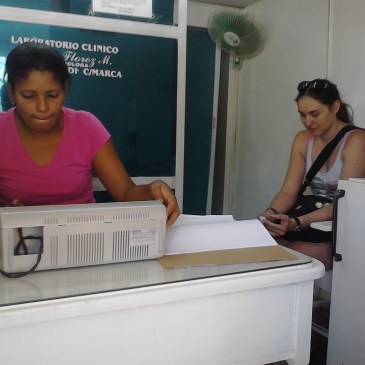
When Colombian babies are born, they are immediately tested for their blood type and that information goes on their birth certificate. Getting my blood type tested I however turned into a big baby. Wedged between Santa Marta´s registry office and a photocopy place is a tiny white shopfront that looks more like a small garden shed than a blood lab. That is where you go to find out your blood type and get an official piece of paper with it written on it, because the cedula process needs official certification of your blood type.

It´s a walk in-walk out type place and in under 5 minutes and for COP$5000 (US$2.50) I came out with throbbing, still-bleeding finger where the attendant had carelessly stabbed me and an official blue card proclaiming me to be O+, the universal receiver.

So while I am the universal receiver, mi novio is the universal giver. I think there´s a fair chance some would also say that´s how our relationship could be described too.

~~~~~~~~~~~~~~~~~~~~~~~~~~~~~~~~~~~~~~~~~~~~~~~~~~~~~~~~~~~~~~~~~~~~~~~~~~~~~~~~~~~~~~~~~~~~~~~~~~~~~~~~~~~~

Inspired to donate blood? Do it!

Australia: www.donateblood.com.au (and a shout out to my former colleague Benny who has been behind a number of those campaigns encouraging you to donate)
Colombia: www.cruzrojacolombiana.org
USA: www.redcrossblood.org
UK: www.blood.co.uk
Canada: www.blood.ca
New Zealand: www.nzblood.co.nz

If you are in another country, do a search for blood donation to find how you can save lives.

Getting a partner visa in Colombia

When I got my one year live, work, study visa for Colombia in early February, it was definitely a woohoo moment.

I had been worried about getting it because the reality is that I just want to be with mi novio. Another 6 month separation was not high on the list of tortures I’d be willing to face.

Since I did a fair bit of research, asking couples we know who have been through the process and blog reading into getting a partner visa to stay in Colombia, I want help others out with understanding the process, especially since there are likely to be some changes now the Ministerio de Relaciones Exteriores (MRE) is responsible for visas and not the now-defunct DAS.

What do I need?

A list of the requirements, the process and fees for the Conjugal or Companion to a Colombian National visas can be found on this page of the Ministerio de Relaciones Exteriores website. Note that although there is an  option to change the language of the page to English (in the top right corner) the Spanish information is much more comprehensive and detailed.

I had read that there is a requirement to demonstrate that we had been together for 2 years (which we can’t show) however you will note that there is no mention of this on the MRE website which was given to us by a government official at the visa office in Bogotá as the ten commandments of partner visas.

Note that there are two points under Requisitos Especiales which are basically asking for the same document, the escritura publica or marriage certificate.

How do I get the escritura publica?

Perhaps the trickiest document to arrange (aside from any documentation you are submitting to enable you to work in a regulated profession in Colombia) is the escritura publica from the Notary declaring our defacto relationship. I think the pursuit of this document brings you to the ‘living together for 2 years’ request.

In Santa Marta there are three notaries. Notaria 1 said I needed to have a Colombian entry stamp in my passport at least 2 years ago, which I don’t have. Notaria 3 said I needed to have a non-interrupted stay of at least 2 years without leaving the country, which I definitely don’t have. Notaria 2 said yes, she could help us and had processed escritura publicas for other Colombian/foreigner couples.

We were slightly concerned by the differing information from the notary offices, however given that the most helpful and approachable woman at Notaria 2 had helped other couples before led us to take the chance on paying the COP$160,000 fee in order to get the essential document.

All we needed to provide (in addition to the fee) were copies of my passport bio page and the stamp from my latest entry  to Colombia, in my case this was just 16 days before applying for the escritura publica, along with notarised (witnessed) copies of your Colombian partner’s cedula (national ID card) and birth certificate.

During this process and in talks with la suegra, I came to learn that in order for a defacto relationship to be recognised legally (and enable access to another’s medical insurance or pension), a Colombian couple needs to live together for 2 years and have family or friends act as referees and sign a document declaring this at the Notaria. I think this is where the ‘living together for 2 years’ idea comes in, even though as foreigners the maximum stay on a tourist visa is 180 days in a calendar year, something I tried to ask politely and without any seed of frustration to Notaria 3.

Getting the escritura publica takes 2-3 business days (or 5 if the Notary’s photocopier isn’t working) and be prepared to go back the day after you lodge the application to sign the documents that will be fed up the signature hierarchy.

The forms

There are two official forms you need to fill in. They are both quite straight-forward and can be downloaded from the MRE website. However, you do need to stick a photo on Form DP-FO-67 BEFORE you go in for your appointment at the visa office. Thankfully there was a gluestick at the reception for this very purpose when I had my appointment. You wouldn’t want your application being rejected for failing to stick your photo to the form (could that possibly be the smallest infringement?).

Do the copies need to be witnessed?

This is something important that isn’t actually detailed on the MRE website, however I found this handy helper on the Government of Colombia website  which tells you whether you need the original, a photocopy or an authenticated copy of each document.

There are two ways the Notaria authenticates copies, one being sighting the original card or document and signing a stamp to verify the copy. The other, which is for the letter your Colombian partner needs to write requesting that you be granted a visa, is where your Colombian partner needs to sign a declaration stamp and then put a fingerprint on the document certifying it’s trueness because it is an original and not a copy of something else.

Any notaria can authenticate documents.

What do you write in the letter?

Mi novio was at a bit of a loss as to what to write in the letter, so I suggested he include my full name, nationality and passport number in the content, along with a statement that we have a genuine relationship and I need to live in Colombia for us to have a future together. It doesn’t need to be a long letter, just the basics and a short statement about why your Colombian partner wants you to have the right to live in Colombia.

How much does it cost?

Budget approximately COP$550,000 or US$300 for the visa process and more if you need to travel to Bogotá to lodge your application.

  • Escritura publica: COP$160,000
  • Non-refundable visa appointment fee: COP$93,000 *not exact because it is based on currency conversions from US$50, called the estudio, or study fee
  • Visa fee: COP$250,000 *not exact because it is based on currency conversions from US$160
  • Witnessing: approx COP$20,000
  • Passport photos: approx COP$5000 – $10,000
  • Photocopying of documents: approx COP$5000

How does the appointment process work?

The only place you can apply for this visa is at the office in Bogotá. Check carefully the address and opening hours of the office on the MRE website. You cannot make an appointment time, you have to just show up.

Whilst we wanted to arrive early at 7:30am when the visa office opened to avoid long queues, we needed to get one more document witnessed and the closest notary to the visa office didn’t open until 8am. Instead we arrived at 8:30am and found fewer people waiting than when we’d stopped by the day before to double-check we had all the right information and forms.

When you arrive at the visa office you need to present your passport and get a turn number. You will then receive a receipt to pay the visa appointment fee (what they call the estudio fee) at the next Banco Sudameris booth. After making your payment you find a seat in the waiting room and wait for the electronic turn system to announce your turn.

When it’s your turn you make your way down the corridor to the desk number mentioned on the turn system. I’m sure I shouldn’t need to say it but a smile, buenos dias and handshake for the immigration official should be top of your greeting checklist.

I was asked when I first arrived in Colombia and what my profession is and we were asked how we met, how long we’d been together, what our plans were, were we planning to get married and other questions along these lines. I was honestly expecting a more hardcore interview where we were interrogated separately about our likes and brands of deodorant (even one viewing of Green Card is enough to leave a lasting impression) however it didn’t come to that. I guess our honest and friendly answers and the fact that mi novio had visited me in Australia to meet my family and friends, was enough to convince the official that we have a genuine relationship without having to have a public pash fest (not advised, by the way).

After our conversation the official sent us back out to the waiting room while he looked over our documents and application. About 20 minutes later, he called us back and said that I had been granted a one year visa to live, work (in a non-regulated field) and study in Colombia. We were elated! With this news, we had the option to pay the visa fee by card or cash. Paying by VISA card (they don´t accept MasterCard) is the instant option as paying in cash requires going back out the bank booth and the interviewing official can take a card payment on the spot.

I then got a shiny new visa stuck in my passport and mi novio was told that I am his responsibility while in Colombia. Thankfully he wasn’t scared about the can of worms that could possibly be! I also think he’s secretly quite pleased that his name now appears in my passport on my visa.

More information

  • According to the MRE website, you can be granted a visa of up to 3 years, which is at the discretion of the immigration official at your appointment.
  • There is no such thing as renewing this type of visa, you have to go through the process from the beginning again at the end of your visa.
  • The escritura publica confirming your defacto relationship can’t be older than three months, therefore when you need to apply for a new visa you need to get the escritura publica again from the Notaria.

Links

Ministerio de Relaciones Exteriores: http://www.cancilleria.gov.co/servicios/colombia/visas/categorias_visa/temporal/conyuge_nacional_colombiano

Colombian Government Online: http://www.gobiernoenlinea.gov.co/web/guest/home/-/government-services/22468/maximized

A Year Without Peanut Butter blog on getting an Independent Worker Visa process: http://ayearwithoutpeanutbutter.com/2013/02/27/some-thoughts-about-visas-and-victories/
Ducking next door to Venezuela

Arriving in Venezuela to collect D after his summer holidays with his mum I was struck by two figures hogging the limelight. Hugo Chavez and Simon Bolivar. One is dead and the other is potentially on his deathbed if the conspiracies prove true.

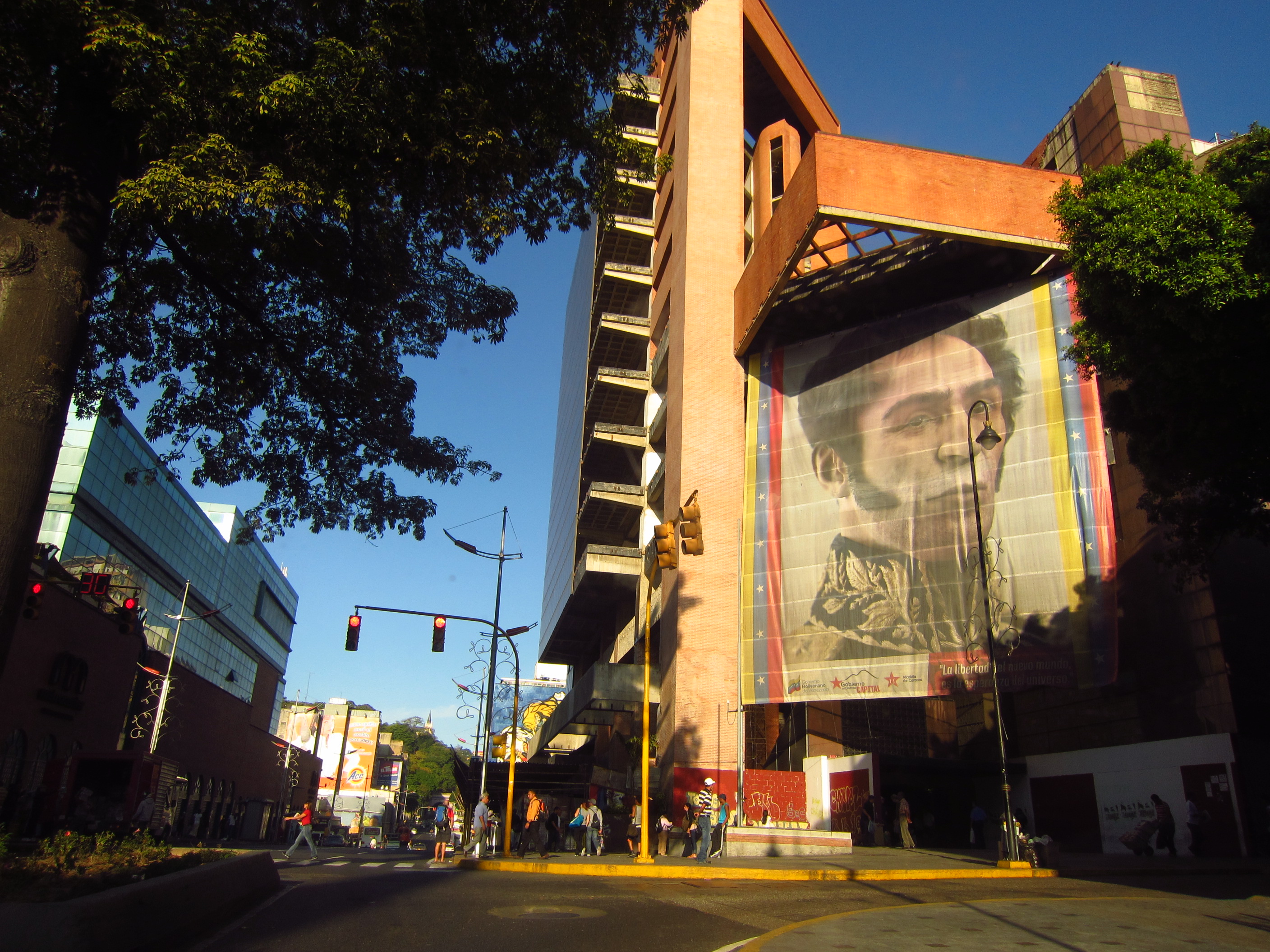
Simon Bolivar, plastered larger than life on a building wall

Simon Bolivar is an important figure in Latin American history leading the revolution and liberating Venezuela, Colombia, Panama, Ecuador and Bolivia from Spanish rule. He is forever linked with Santa Marta because he died here 182 years ago but he lives on in Venezuela with incredible monuments, museums, pictures and in Venezuela’s official name of the Bolivarian Republic of Venezuela, changed by Chavez in 2000. Just about everything seems to be Bolivar this and Bolivarian that.

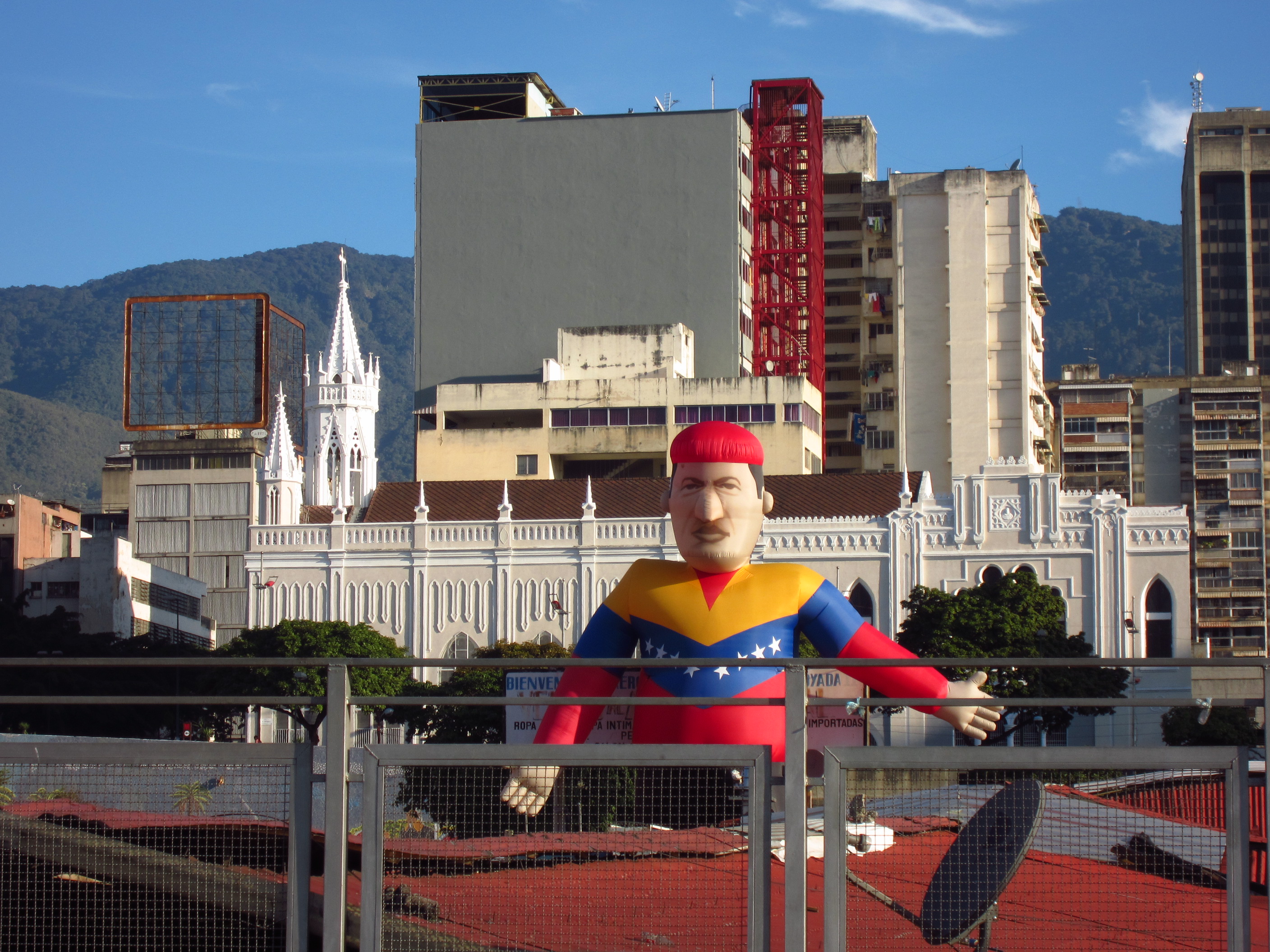
Inflatable Chavez

Hugo Chavez, the much-loved and much hated president of Venezuela, is omnipresent. From the giant inflatable Chavez in the centre of Caracas to everyday conversations and the “I am Chavez” billboards you see evidence of him everywhere except in person as he’s currently convalescing from complications due to cancer surgery in Cuba. We arrived on the day of his supposed inauguration as President for the sixth time, but given that he hasn’t been seen publicly since before Christmas, the ceremony has been delayed until he is recovered.

I felt uncomfortable in Venezuela, and not just because we had to borrow money of D’s mum because we hadn’t changed enough at the border and didn’t know it was so difficult to change inside the country. I got a sense of great disorganisation. I looked around and saw election propaganda from the elections last year, but felt as though nothing flowed through to benefit those living around the painted walls. We were told that it’s not safe to venture out in Caracas in the dark of night or early in the morning and this was verified by people arriving by bus in Caracas pulling up seats in the terminal to wait for the sun to rise when they would start making a mass exodus to the taxi ranks. We bought skinny empanadas from a lady who told us that flour was being rationed and they could only buy 2 bags of flour. We endured more than 5 army and police checkpoints on the way in and out of the country, compared to just one on the way in to Colombia. I froze on the overnight buses that have the air conditioning locked onto a temperature even colder than Colombia’s overnight bus.

I might still be suffering from memory burn of our 11 day bus trip in October, but the 3 nights out of 4 we spent sleeping on buses and the good 16 hours spent in bus terminals were extremely uncomfortable. Thankfully we did have a lovely day at the beach near Caracas with D’s maternal grandmother, aunt, uncle and cousins who were so welcoming and hospitable up to the point where D’s cousins started calling me tia which means aunt.

Neither mi novio or I am keen to return to Venezuela any time soon. I still want to go to Angel Falls and do the Simon Bolivar history trail in Caracas, but I think that can wait until I’m ready to tackle the challenges Venezuela throws up. Right now, I’m super happy to be back in Colombia. It’s like a breath of fresh air.

This slideshow requires JavaScript.

5 Colombian New Years Superstitions

I saw 2013 in with some Colombian traditions at home.

Colombians are quite superstitious people. Magical realism isn’t just a literary style, but a part of everyday life for many of the Colombians I know. As such there are many superstitions and interpretations of omens to explain the present or predict the future. I think the strong Catholic culture provides fertile ground for the magical realism of life, especially here on the coast where time seems to operate in a different dimension.

In making plans for New Year’s Eve, I wore my good old Aussie Akubra. I planned a menu of finger food, music, mocktails and party poppers. I imagined the countdown and then the big grins and arms wrapped around friends and family while from seemingly nowhere the strains of the un-singable Auld Lang Syne wafted in. I was definitely on a different continent whilst imagining this scene.

I think the realisation I was not at home only dawned on me when it became a big deal that mi novio and D weren’t going to be at home with the family and when la suegra told me I had to go buy yellow undies. Family is a lot more important in the everyday lives of Colombians than it is for Australians. There are many dates in the calendar that are important for the family to be together, whereas in Australia, the only really important family date is Christmas. I was expected to call my family back home to wish them happy new year, although truth be told, my family would never expect a special New Year’s Eve call. For Colombians, it’s important to spend New Year’s Eve with the family and participate in an aguero (superstition or omen) or two.  Here are five superstitions I learned about in the last few days of 2012.

1. Start the new year in a state of cleanliness

While we have spring cleaning, here they go to great lengths to clean out all the cobwebs, dust the ornaments, tidy wardrobes and wash clothes before the new year ticks over. Having a clean home is a way of welcoming positive changes and having a great year free of the rubbish of the previous year. The cleaning frenzy extends all the way to cleaning the fish tank and having a good scrub in the shower.

2. You have to be awake at midnight

This might sound a little strange, but it is frowned upon as bad luck if you are caught asleep as the clock ticks over midnight. I think I’ve probably been asleep a few new year’s eves before midnight, but even though I was exhausted and there wasn’t much happening in our house this year, I had to set the alarm to wake up before midnight if I was planning on a late night siesta. Although the deafening crappy, repetitious music in the street wouldn’t have let me sleep even if I’d wanted to.

3. Eat 12 grapes at midnight and make a wish as you swallow each one

In the days leading up to 31 December, carts laden with grapes appeared in the streets so people could quickly and easily buy some grapes to complete the superstition. This tradition originated in Spain with the likely explanation that it started with grape-growers trying to sell their leftover grapes. In Spain you are supposed to swallow one at each strike of the clock at midnight. Here in Colombia it is a bit more relaxed. You have to start on the first grape as the clock ticks over and try to eat the grapes as quickly as possible, but in typical Colombian style, there isn’t a rush or sense of urgency about it. I found it helped to write down my 12 deseos (wishes) so I didn’t forget them as I was scoffing down the grapes and trying to spit the pips out; something I’ve never been any good at.

4. Hold some lentils in both hands

The lentils signify that you will be blessed with food during the year and not go hungry. At midnight you should hold a few uncooked lentils in each hand to receive this blessing. A sister-in-law told me to put a few in each pocket so as not to be caught without lentils at midnight.

Yellow undies5. Change into a new pair of yellow undies

I stared at la suegra incredulously when she told me the day before New Year’s Eve that she had to go to buy some yellow undies. It just came out of the blue and when I asked why, she said it was to bring prosperity in the new year. The idea is to slip into the new yellow knickers at midnight for the wealth to come your way, however in amongst eating 12 grapes and holding onto some lentils, this is a little difficult to do!

Now all I need to do is wait out the year to see if these little rituals work and bring me prosperity, wealth, good vibes and my 12 wishes. If these don’t work, I could always try something new from this list of 22 Latino rituals and traditions next year.

Do you have a new year’s superstition or ritual?

Living in the Land of “No Seasons”

A case of the sun is always sunnier on the other side

Most people I know dream of chasing the sun and living in a perpetual summer. Well here I am so my life must be sweet as, right?

Unfortunately the reality isn’t quite as glamorous. The idyllic relaxed attitudes and lifestyles you encounter on a tropical holiday, are really a by-product of living a life without change. That is to say we are all more relaxed and laid-back when summer and it’s long evenings with barbecues and drinks by the pool rolls around.

I’m sure there is a tropical relative of the SADs (which is when you don’t get enough sun because of a dark and grey winter) that sends you round the bend from too much sun, day in day out (not to be confused with sunburn). I hope I don’t catch it and go troppo, which, incidentally, is the name of the Stu Lloyd book I am currently reading.

This is a great piece of blogging by a ‘neighbour’ of mine (well, we’ve never met but she’s a fellow expat who lives in the next city, which to me is good enough to warrant the title) at Transatlantic Adventure all about living in the land of no seasons. She sums it all up excellently, have a read.

Paige's avatarTransatlantic Adventure

This is the second time I’ve lived in Colombia. The second time I’ve lived in a world of “no seasons.” Because of Colombia’s latitude and longitude (in other words–it’s closeness to the equator) there is VERY little, if any, change in temperature throughout the year. Yes, there are all sorts of temperatures to be found in Colombia from the freezing peaks of la Sierra Nevada to the boiling temperatures of la Guajira and the rainforest humidity found in Leiticia to the temperate, Spring-like temperatures of Medellín, and the somewhat cooler zones of Boyacá and Cundinamarca. In fact, Colombia has so many climate zones that it is the most bio-diverse country in the world!

Valle de Cocora, Salento

Now, that being said, the temperature in a specific place doesn’t really change. In other words, in Bogotá the temperature during the day generally falls in the 60s (Farenheit) and in Barranquilla in the 90s  (Farenheit)…

View original post 1,138 more words

Making a dictionary worth its weight in words

When I was packing my bags to move to Colombia my hardcover Collins Concise Spanish Dictionary was on the yes list. Then on the maybe list. And ultimately ended up in danger of landing on the no list.

At 1.977kg on the kitchen scales it took up a decent portion of my luggage allowance. I started out adamant that it would be coming with me. I wasn’t going to buy a new you-beaut dictionary in Colombia that would cost a bomb and run the risk of not being as good (as discovered in a previous experience buying a not-to-be-trusted, inadequate dictionary in Latin America). I had also decided that my He-Man novio could do me the favour and carry it; it would be useful for him too and help to tone his muscles.

After seeing the mountain of belongings I was taking begin to grow like the local rubbish tip, I panicked about how much everything would weigh and started to think up weak reasons for not packing the dictionary.

Only at the final hour when everything was packed and weighed did I find I had both the physical space, and a spare two kilos for the behemoth. And so the dictionary joined us on our international journey and breezed through the airport check-in.

When we changed our plans mid-journey and decided to forgo our plane tickets, we suddenly had a much tighter (and stricter) weight limit to take on the bus. On our international bus trip we had to pay excess baggage, twice. Whoops! Suddenly the dictionary of my dreams was a dead weight, costing us money to keep it on the journey.

Cut to 2 months later and I’m now grateful I decided to bring the world’s weightiest dictionary with us because I’ve landed myself a gig updating some translations in a tourist guide to Santa Marta and I need to get the words right. At first I thought pobladores meant villages, but after confirming with Señor Diccionario, discovered it means settlers. It’s tricky little words like this and aledaña (outskirts) and the one I always forget destacar (to emphasise or stand out) that mean my dictionary is now worth its weight.

A fiesta!

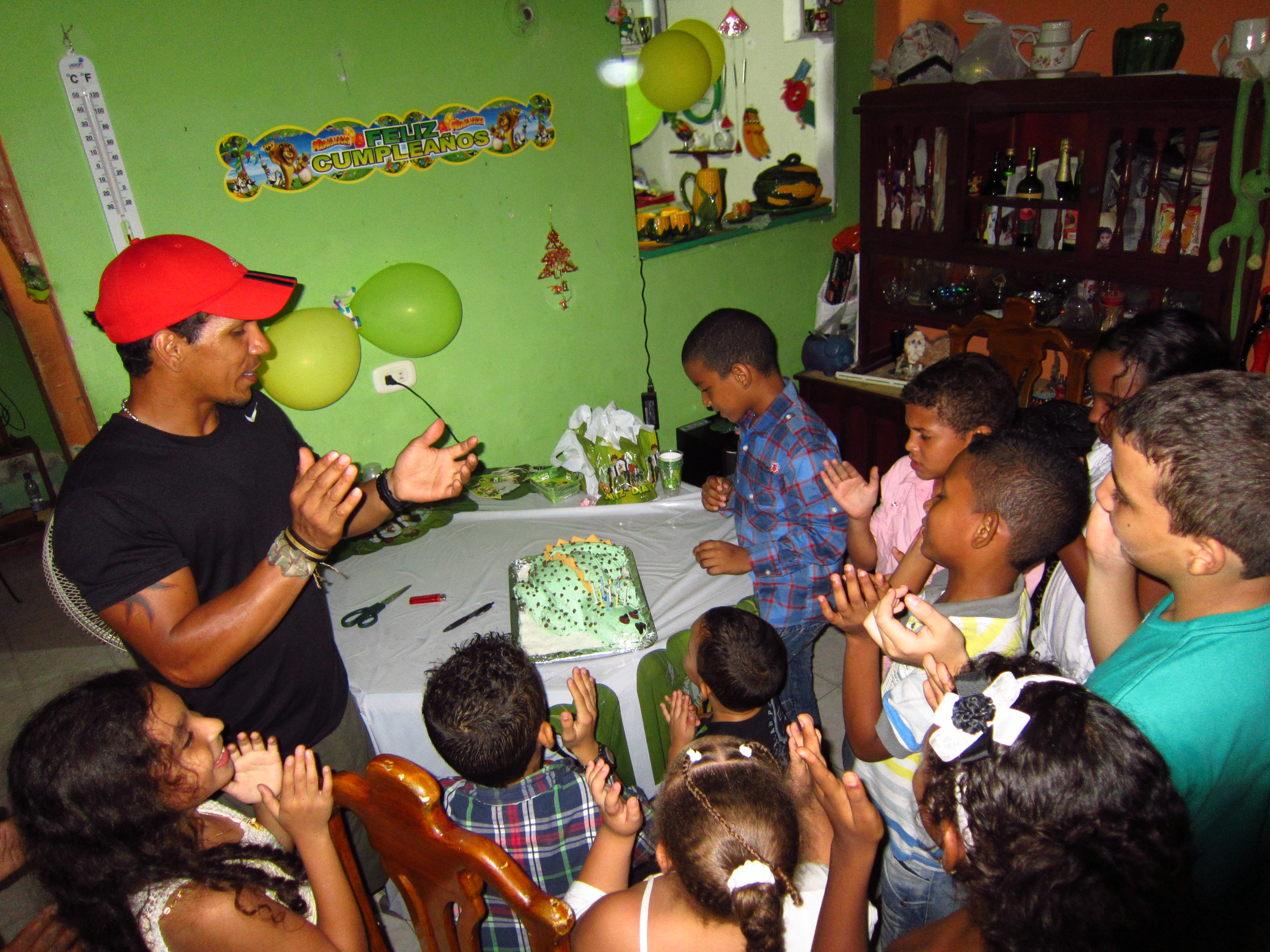
Singing happy birthday
All the kids gathered around to sing happy birthday to D

When asked what he would like for his ninth birthday, a present or a party, D chose a party.

Preparations began by choosing a theme, Ben10, and trying to find all the Ben10 party paraphernalia as cheaply as possible. I’m sure the invitations, plastic cups, cake plates, lolly bags, plastic tablecloth and cardboard neckties on elastic came from some rip-off company and so were cheaper because we weren’t paying for an officially licensed product. But then again, what do a bunch of nine year olds care about royalties.

I brought to the party planning table an Australian mentality: There will be games, there will be prizes, there will be fingerfood and there will be a cake worthy of inclusion in the Australian Women’s Weekly Birthday Cake recipe book. However without having been to a kiddie birthday in Colombia before, I didn’t really have anything to benchmark against. I mean, I could throw a great party by Australian standards, but how would this hold up in Colombia?

The day before the party I was busy making jelly cups. Unfortunately they don’t have Freddo Frogs here, so they weren’t to be frogs in ponds, but just plain old ‘gelatina’ in strawberry, grape and cherry flavours. I said to mi novio “I think 25 jelly cups is enough. I mean not all of the invited kids are going to come to the party.” Mi novio replied with:

“Things are different here, the kids bring along their brothers, sisters, cousins, neighbours, whoever. All they want to do is dance and eat cake/sweets/lollies.”

Sudden panic overcame me as I did the sums. 24 invited kids x 1 sibling + 1 parent + 1 more extra just to be safe = not enough food and drink.

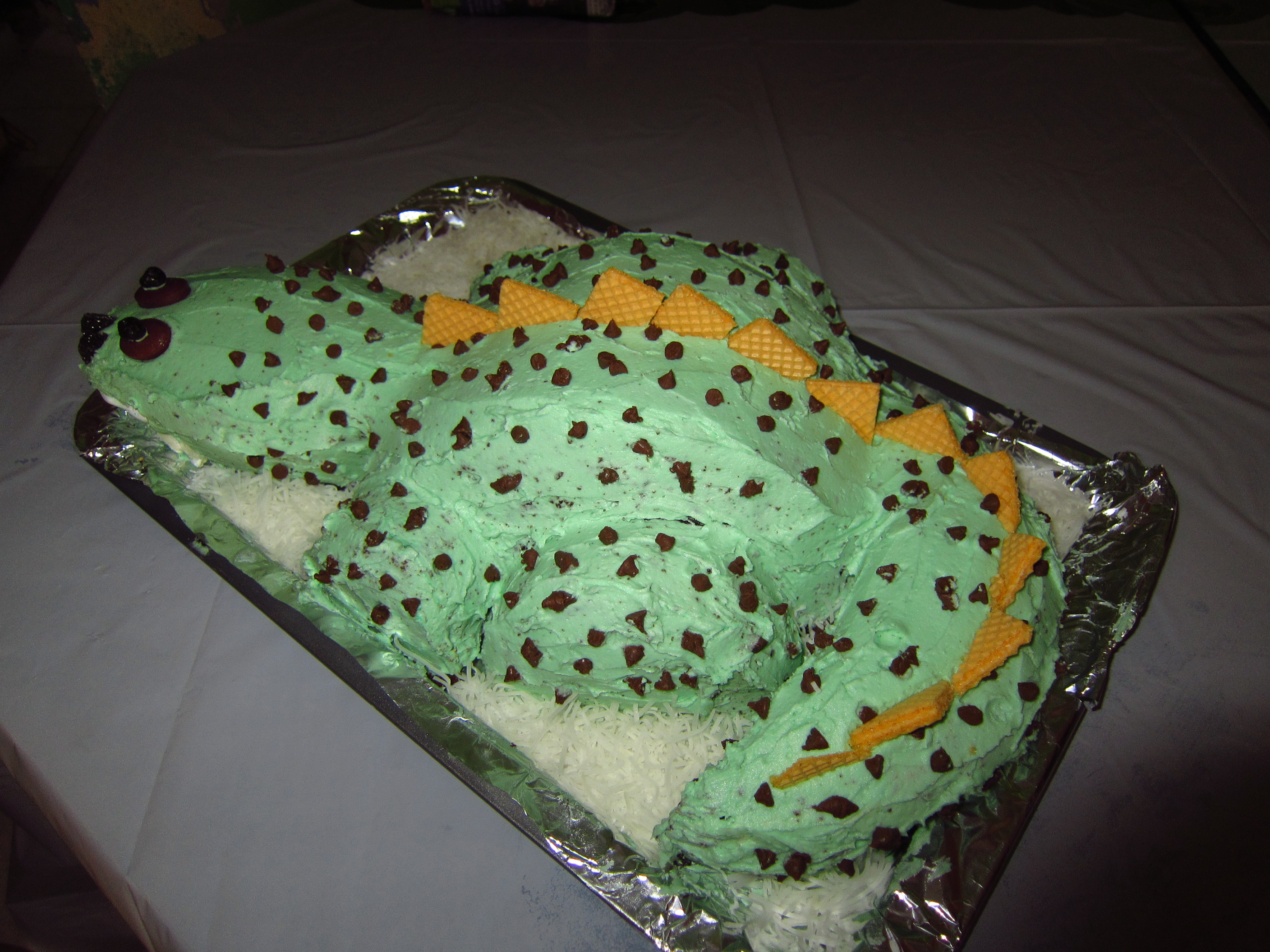
The dinosaur cake
The dinosaur cake, a winner with young and old!

We had the birthday cake (an elaborate test of my cake decorating skills dinosaur based on this plan), 25 jelly cups, little deep fried pastries with cheese inside, 7 litres of neapolitan ice-cream, 28 cupcakes and some wafer biscuits. After some dithering as to what I could make in an oven with no visible temperature markers, I decided we also needed honey joys. I hoped to goodness this would feed the hordes, I couldn’t have all these people think I was a bad hostess.

I spent the morning of the party icing the dinosaur. I have to admit I’m pretty pleased at the outcome given working in a small kitchen with no real baking tools, 30 plus degree humidity and with no proven cake sculpting skills under my belt. It also helps when practically all Colombians buy their birthday cakes from a cake shop, so the dinosaur created multiple wow factors. Wow! It’s a dinosaur! Wow! You baked it yourself! Wow! It tastes great!

Mi novio spent the afternoon blowing up balloons with the help of D, his cousin and his friends in the street and la suegra spent the afternoon putting away her precious ornaments.

At four o’clock the hour of the party arrived. Yet no guests arrived. Half an hour later and the sole guest was one of D’s best buddies from two doors down. As five o’clock started to come around, the house started to fill with kids and relatives. Mi novio and I were busy in the kitchen pouring cups of soft drink and sending out platters of cakes and jelly cups. No sooner had I arrived back in the kitchen would a child come up and hand me their finished cup/plate/spoon, only to be followed by all the other party goers. Whilst their tidiness was to be admired on one hand, the other (busy hand) was wishing they would just leave it under their chair to be collected later so they could stop interrupting us!

In an attempt to get the party revved up, mi novio wanted to commence with the games. So we played musical chairs, and then while he dashed off to the supermarket for serviettes and apples, he told me to start dancing to liven up the party and get the kids dancing. I succeeded in getting the 3 year old nephew to dance, but all the other kids looked at me awkwardly. So I retreated to the kitchen to make my honey joys.

The tiny kitchen was overflowing with used cups and spoons, trays, ingredients for honey joys and 600ml blocks of ice. The music was throbbing at the typical Colombian ‘nobody needs to hear anyone talk’ level and my feet hurt. Was it time to cut the cake yet?

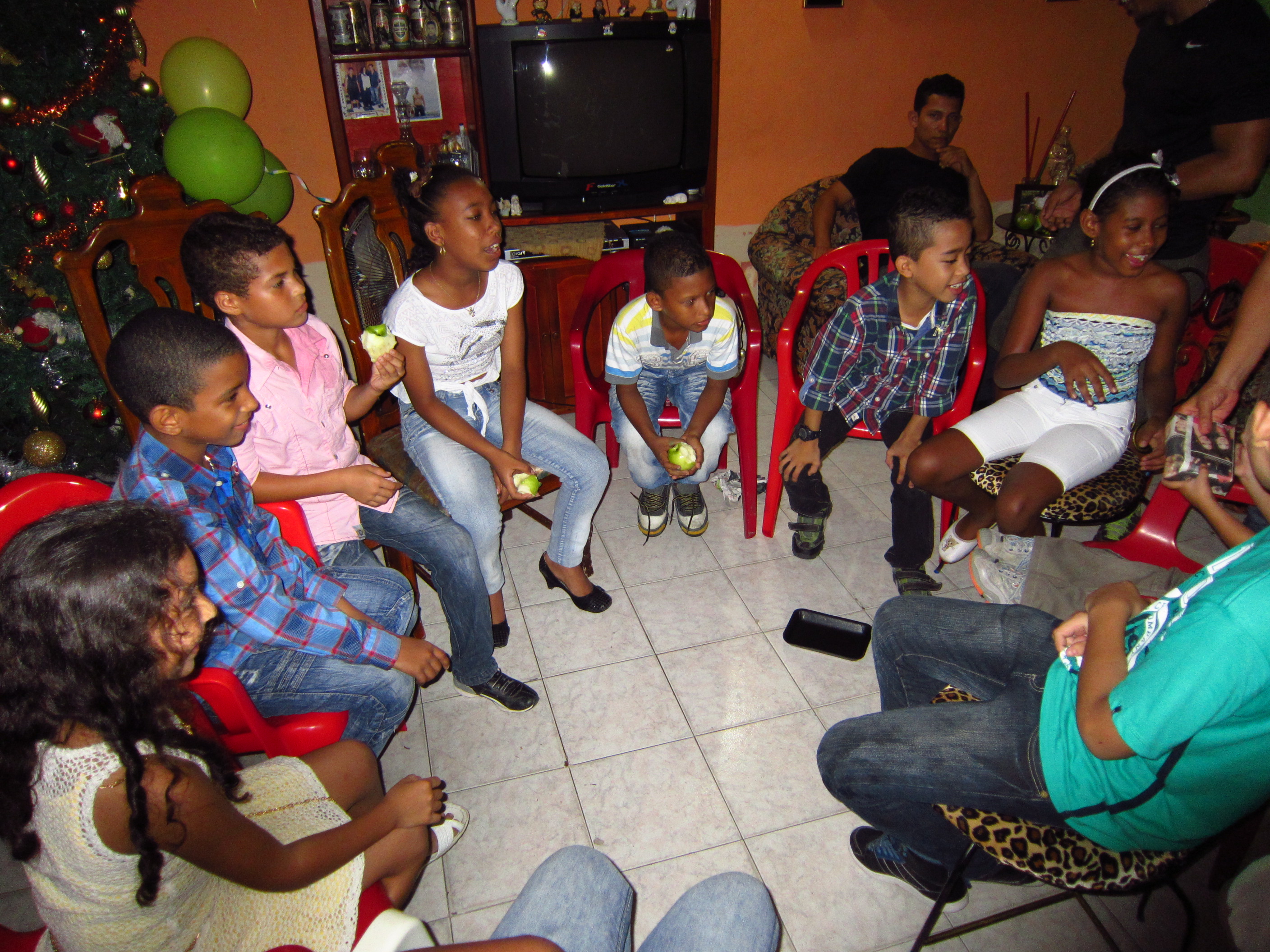
But no, we still had to play the other games. Despite never having played, or even seen it played in real life, I had decided an apple bob would be fun. Because it was raining outside we had the tub of water on a chair inside and each kid had a turn at pulling an apple out with their teeth. I had underestimated how popular this would be with the kids, even with 12 year old girls. They relished the challenge and it was insanely hilarious to see their heads bobbing about and their faces come out dripping wet! Note to self, this is a game we can play again.

Playing pass the parcel
The kids playing pass-the-parcel, they’d never played it before.

After pass-the-parcel where D started to sulk because the parcel never stopped for him to open a layer, we moved on to the cake and happy birthday. I should have remembered from last year that I would need to brush up my birthday singing in Spanish, however I overlooked this detail. The Spanish version of Happy Birthday they sing here seems different to that which I learned in Spanish classes. So I just smiled and murmured and took photos.

With the birthday cake dished out, the party started to grind to a halt, and mi novio and I could breathe a sigh of relief, pour ourselves a soft drink and eat a left over jelly cup. I had been petrified that a zillion kids would come, but there were only about 13. Most of D’s friends from school didn’t show up. I think if they did, it would have been chaos!

D went to bed happy, full of sugar and with lots of new clothes given to him by his guests.

And I went to bed thinking that at the next Colombian party we throw, we need to have ample drink and ice and just make sure we feed our guests as soon as they arrive. That, I think, is the key to a successful Colombian fiesta.