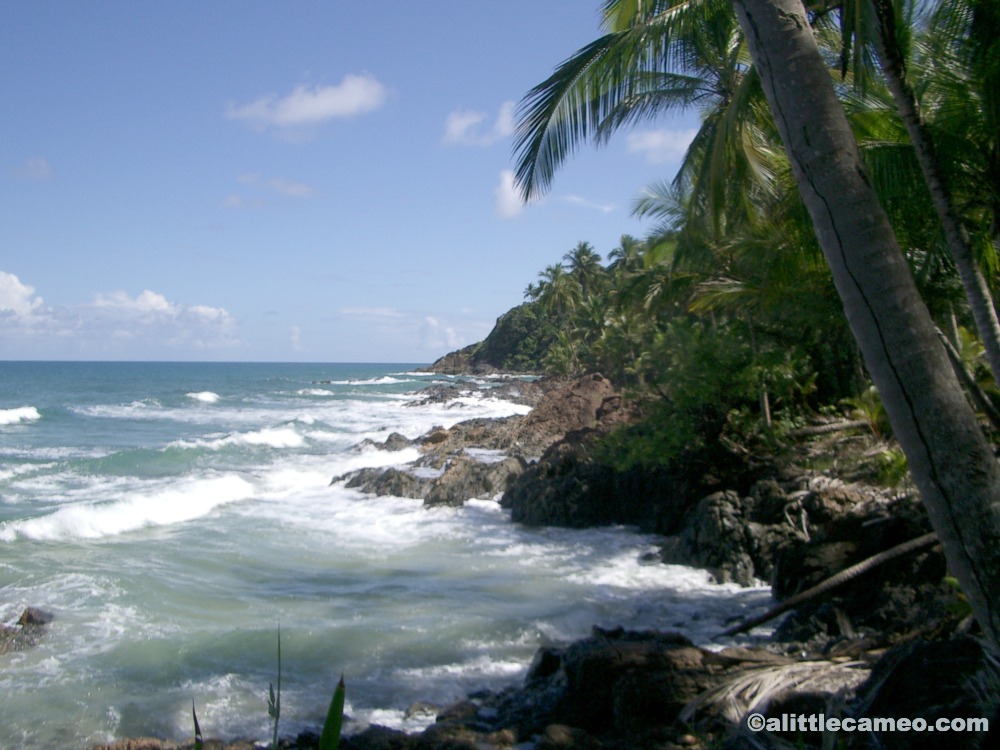
The small town of Itacaré between Porto Seguro and Salvador wasn´t listed in my Lonely Planet Shoestring Guide to South America. I ended up here tagging onto a group of travelling Brazilians and one Swiss guy who had joined up to form a sizeable group of eight people. Nine including me. One of the Brazilians spoke good English, and of course the Swiss guy, but I communicated with the rest of my new friends with exchanges of smiles, laughs and gestures and just followed them like a little lamb. It was fun!
Brazilians are great travellers in their own country, especially at Carnaval time when they will take a month off and travel. I loved this attitude and vowed to take this idea back home, where we usually plan out our domestic trips carefully and save the random wanderings for other countries.
I never would have discovered a string of breathtaking beaches and this coastline had it not been for my Brazilian friends adopting a little lost Aussie. I also wouldn´t have learned how to wear a Brazilian bikini, confidence most definitely required but any show of butt crack is unacceptable so instead you should forget about trying to modestly cover your butt cheeks and allow your bikini bottoms to creep into a wedgie.
This photo served as my screensaver on my old computer for many years. It is a beautiful coastline and it always makes me think about the friends I´ve now lost touch with, but who I will always remember for their openness, sharing and vivacity.
The Photo Vault is where I will be sharing my favourite photos (and their stories) that deserve better than being lost in the depths of my iPhoto never to be shared.
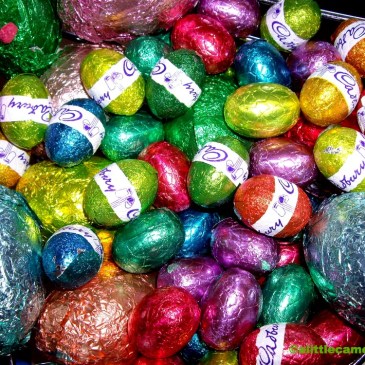
Australians are the biggest consumers of chocolate at Easter. I read that somewhere (in an article on taste.com.au that is no longer there). Even if it´s not 100% true, Australians have to be in a top 5 consumers of chocolate at Easter. We´re nuts about the Easter Bunny and egg hunts and all sizes of eggs from the little ones to the super-dooper huge ones. Then there are bunnies, bilbys and mugs with eggs inside them. There are little chocolate chickens and there are chocolate carrots (for the Easter Bunny who still wants his carrot).
So here I am in Colombia on the other side of the world to the Easter chocolate frenzy. There is not a chocolate egg in sight. Not even a little marshmallow chicken. And there is definitely no Easter Bunny. When I learned that the Tooth Fairy here is called El Raton Perez, I asked about El Conejo de Pascua and was met with furrowed brows of confusion. Nope, here is it all about Jesus on the cross.
I kind of expected a low dosage of chocolate and Easter eggs as when I was in Latin America in 2004 there weren´t any of my traditional bunnies and eggs. However this article says Brazil has the second highest consumption in the world. When I was in Brazil for Easter 2004 I consoled my Easter egg fix with the Brazilian style of Easter egg. I can attest to the fact they are clear plastic egg shapes with normal chocolates and truffles inside hung from the ceiling rather than stacked on shelves.
I spent Easter 2011 in the United States and I was surprised by the lack of Easter eggs in the stores. Very surprised.
These are the chocolate, peanut, sultana and coconut filled eggs D and I made and decorated
I´m keen to introduce my Aussie Easter traditions to my Colombian family and since having my Australian family ship an Easter Care Package faces the problems of unreliable (if existent) postal service and extreme (ie melting point) heat, I need to get DIY on the Easter Egg front.
I´ve thought about making my own chocolates. Not too hard right? Well it helps when you have the plastic moulds to make them in and my favourite baking supply store doesn´t stock an egg shaped mould.
The other day I read a tutorial for dyed eggshells filled with chocolate, fruit and nuts on Ali Does It Herself. A bit of traditional egg dying and decorating with the inside goodness of a solid chocolate egg. It was laborious but not too hard. Although Ali didn’t mention that piping the chocolate filling from a plastic ziplock requires hands of steel, or at the very least, oven mitts. But, all the effort and burnt palms are worth it. Easter is saved. There is chocolate!
It´s a bit of a tangent to this post on Colombia´s lack of Easter eggs, but I came across an interesting article about where the ingredients come from to make them and it got me thinking. Imagine that your chocolate-a-day habit pays the daily wage of a cocoa worker and that the even more expensive Easter eggs and bunnies are at least two day´s wages. For the cocoa workers who barely earn enough to feed their families and have a roof for shelter, a chocolate bar is a complete luxury. Who has ever been haunted by the poverty of Charlie Bucket´s family in Charlie and the Chocolate Factory and their sacrifices to buy Charlie a chocolate bar in hopes of a golden ticket? That poverty is the reality of cocoa workers in many places in the world (Oompa-Loompas have better work conditions and can eat all the cacao beans they like). From where I live, I can see that this type of poverty is the case for many Colombians too.
If you celebrate Easter, whether for religious or chocolate reasons, I wish you a very Happy Easter! Maybe like in other holidays celebrated throughout the year, we can also think about those who are less fortunate and perhaps donate the value of an Easter egg to a worthy cause.
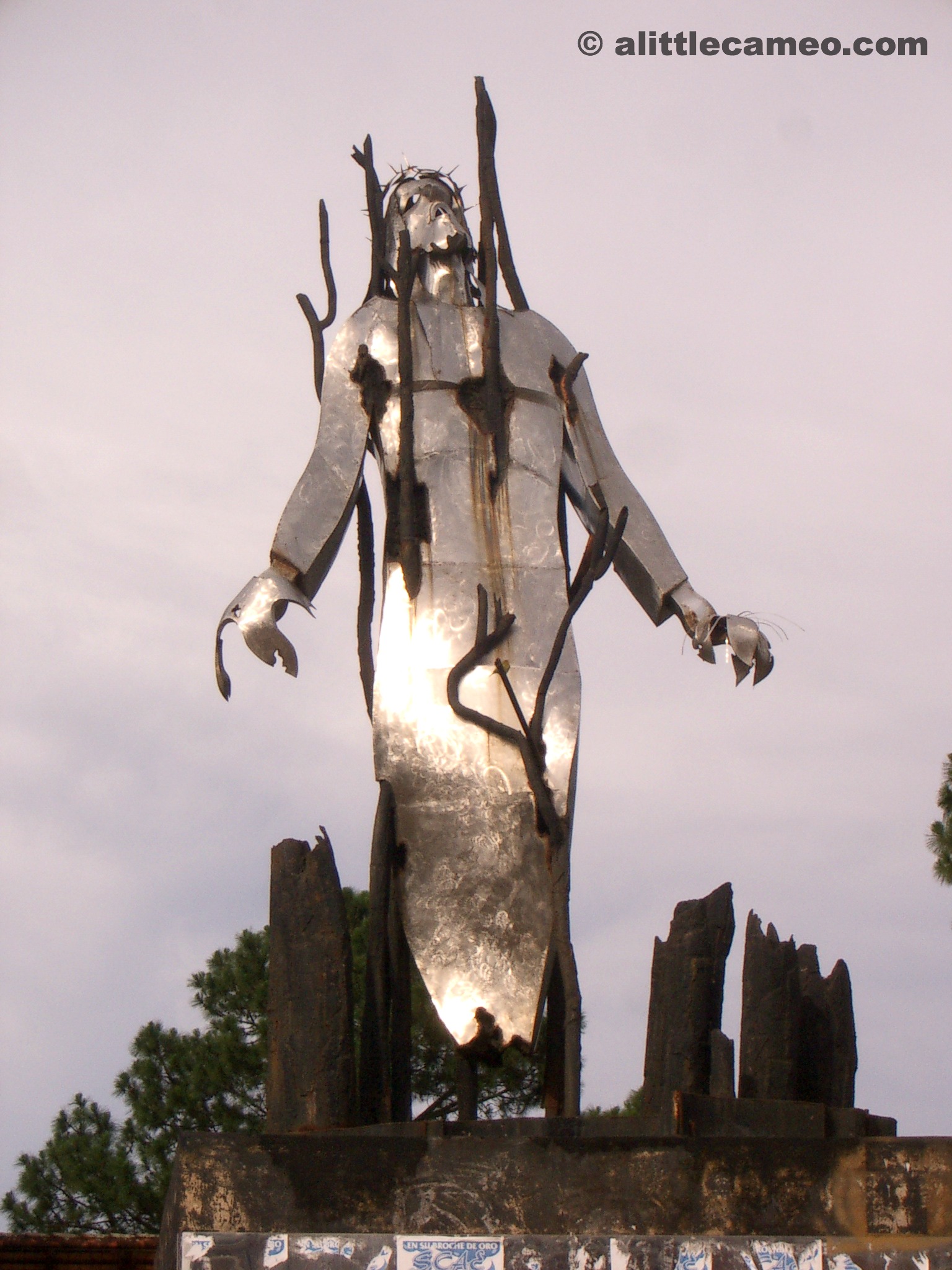
A striking crucifixion of Jesus statue in Encarnacion, Paraguay
Encarnacion, Paraguay, 2004
I was in Encarnacion to visit the Jesuit ruins and took this photo in the early evening while wandering around the city after having just arrived. I never made it to the ruins (instead I visited those in Posadas, Argentina) as it rained all day and ended up indulging in a trashy day watching MTV and jumping around on my double bed in a private room to the music. The small joys of budget travellers. However the image of this statue has stuck with me all these years and is on my list of favourite statues for its construction and materials. I love the pose and the skyward look. The hands are so interesting and kind of alien, taking in far less detail than the face and crown of thorns. He also doesn’t have feet and instead the gown ends in a Casper the Friendly Ghost esque tail, signifying Jesus’ transition I suppose. I guess one of more obvious parts is that Jesus isn’t on a cross, and that’s what makes this statue interesting and unique.
If you celebrate Easter, whether for religious or chocolate reasons, I wish you a wonderful weekend.
The Photo Vault is where I will be sharing striking photos (and their stories) that deserve better than being lost in the depths of my iPhoto never to be shared.
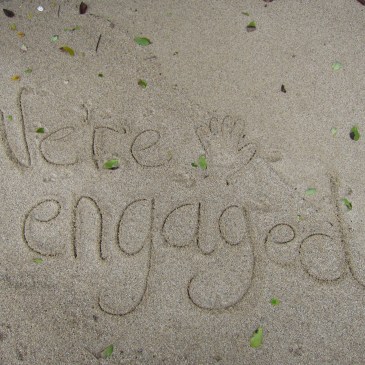
Arriving back home from our recent camping trip to Tayrona National Park full of excitement with the news that we are going to get married and with a beautiful ring on display, I was looking forward to letting my nearest and dearest, okay, everyone, know the news.
In the kitchen I asked mi novio if he was going to tell his mum sitting in the rocker in the lounge room, but he said for me to tell her. So I approached her and said “Señora, we have some exciting news. Your son asked me to marry him and I said yes!” while thrusting my left hand towards her so she could see the ring with which he had proposed.
Her response while looking at my ring was “That´s good. It´s pretty, it´s an engagement ring” and then proceeded to tell us that the recently dead Hugo Chavez was going to be embalmed and put in a crystal coffin on display in a museum in Venezuela. Brief? Yes. Lacking in enthusiasm? Absolutely. A pin prick to my bubble of excitement? Most certainly.
Instantly I slumped in the chair, barely able to hide disappointment at such an uninterested reception to incredibly important news by the first person we´d told.
I gulped down my Coca-Cola and made a speedy dash to the bathroom for a shower where I admit to bursting into tears.
In our roommi novio found me on the bed with my head buried in a pillow and asked what was wrong. I told him that here we were with the most exciting news the house has had for the year and his mother hadn´t shown any excitement, let alone congratulated him. What a great way to feel welcomed into the family. I´m pretty sure in my distraught state I said that if that was how excited his mother and family were going to be, then we´d get married in Australia where all of my family, who I was sure would be over the moon by the news, could attend this important event in our lives.
After my outburst, I tidied myself up and then mi novio came into the room again to find me talking to myself in the mirror. He asked what I was doing, and I answered, rather suspiciously, “nothing”. Clearly it wasn´t nothing and when he asked again I said I was practicing what I would say to his mother to let her know how hurt I was feeling by her lack of reaction to our news. He told me to practice on him, and I unwillingly I relented and put forth my little speech. He asked if I was really going to say something and I told him that if I never said anything, I would always feel the stone of hurt and bitterness in my heart over her reaction. He asked if I wanted him to tell her, and I was unsure but eventually decided that it was probably best for him to broach the subject.
We went out to the lounge and sat down on opposite sides of the room. Mi novio then said “Mamá, Camille feels sad because she thinks you are not excited or happy about our news because you didn´t say anything or express your happiness.”
Her response was defensive and actually slightly argumentative, “I looked hard at the ring and it was nice. If I had have thrown a glance at it and then looked away that would have been an offense. It´s not my responsibility to ask or inquire about anything, it´s my children´s responsibility to communicate with me. I´m not going to ask questions. One doesn´t like to make comparisons, but I was thinking about your brothers and sister and how it´s nice that you´ve told me and not run off and hidden things from me.”
She proceeded to stay off the topic of our pending nuptials and instead launched into a lengthy tirade of how she wasn´t happy about how one son got married 5 months after his father died and so she only went to the church not to the reception, how another son got married in the presence of all his wife´s family and without telling any of his family, how her daughter was supposed to get married in 6 months but then suddenly upped and left the house for her fiance´s home town where a wedding was planned for in a week´s time and how she believed after seeing things on Facebook that another son had gotten married on the sly too. An interesting way of showing she was happy for being included in our celebrations and not making comparisons.
Instead of feeling the weight of sharing my feelings leave my chest, I felt berated for being so sensitive and apparently doing things the wrong way for not leaving it up to her son to tell her we were engaged.
So I told mi novio that from that point he had to tell his family. I wasn´t going to say anything because I´d probably just be disappointed by their reactions and it seems that this type of news is best coming from him than me, the foreigner.
I guess I was better prepared for the lack of enthusiasm from the rest of his family after this experience. His older brother just kind of stared at the news and his aunt (who is both his boss and my boss) just smiled dumbly. A cousin didn´t even say anything. Not once was there a felicitaciones (congratulations) said by a member of his family, except for when mi novio said to his son “Aren´t you going to congratulate us?” but I guess it´s okay to put words in a nine-year-old´s mouth.
As far as life events go, Colombians are more excited by babies and birthdays than by weddings. I´m sure that if we´d announced we were having a baby, the reaction would have been far different. In Australia, whilst many people choose never to wed or have children before getting married, there is still a strong tradition for being married before starting a family. In Colombia everyone asks when you´re going to have a baby. They´re not interested in whether you´re going to get married, just when you get pregnant.
Perhaps my views and generalisations are tainted by my experiences living on the coast. The state of Magdalena where we live is one of the four poorest states in Colombia and teen pregnancies are the norm (condoms are priced way out of reach of a huge percentage of people here) and not the same kind of big deal they are back home. As a matter of fact we are going to a baby shower today for a 17-year-old girl. Truth be told, I had expected to find a greater pressure to get married before starting a family in this Catholic country, but it seems all that matters is bringing a baby into the world, regardless of how old the mother is, or whether she is in a stable, loving relationship.
I asked the girlfriend of mi novio´s cousin why she thought I´d been met with such indifference and she said “Everyone gets divorced or separated anyway, so people don´t really think it´s worth celebrating.” I was astounded at the pessimism on a level which I hadn´t yet encountered in Colombia. However mi novio doesn´t agree with this and says it is just that more people to live together without getting married. Even his parents never got married.
Thankfully the reception to our engagement news from my parents, brothers, sister, grandparents, aunts and friends was overwhelming and effusive. Exactly as I expected it to be and like how I am when I hear exciting news of engagements, weddings and babies – with genuine happiness for the people concerned.
So whilst I had the wind knocked out of my sails, this little boat continues to navigate the choppy waters of cultural differences in search of safe harbours, crystalline water and beautiful beaches like the one where mi novio proposed to me.
Have you ever had an unexpected response to a major life event due to cultural differences?
With my spiffy temporary resident visa all sorted out, the next step to living in Colombia is getting my cedula extranjeria.
Every Colombian is issued with a cedula (national identity card) which they are required to produce or rattle off their number for anything and everything. The cedula contains important information like name, sex, date of birth, place of birth, height and blood type. It doesn´t however contain important information like address or favourite colour.
As a foreigner living in Colombia I need a foreigner´s national identity card to produce when asked for ID, to open a bank account and for a myriad of other processes. This is in addition to my passport and visa.
Armed with a list of everything required for the cedula processing, I stumbled across a piece of information I didn´t have – my blood type.
If you ever want to see a surprised Colombian, just tell them that you don´t know your blood type. They will ask how is this possible, and what happens if you are in an accident and need blood and will expect an answer that they will still challenge.
The only two people in my family who know their blood types are my aunt who has had two kidney transplants and my grandfather who donated some blood to himself before hip surgery. Curiously, my mother who has been the recipient of a few blood transfusions with a stint in intensive care where she was basically bleeding to death, doesn´t know her blood type.
It´s really not something that most people in Australia know, unless they are a blood donor, but it is a big talking point in our Colombian house. I can see why it is important to know your blood type here. Colombia isn´t blessed with a health system and blood service like we are in Australia. There are very few ambulances (most people hail a taxi) and resources are stretched thin in the clinics and hospitals. The few moments it takes to type your blood could make all the difference to your survival here.
The blood service here works more on a “we´ll give you the blood you need if you can rustle up the same amount in donations from your family and friends”. Colombians are very hospitable and generous people, but that doesn´t really cross over into genuine altruism like blood donation. One of mi novio´s aunts recently underwent surgery. Prior to the surgery, another aunt came around to the house seeking donations because the family needed to stump up 4L of blood to replace the blood his aunt would require during and after the surgery.
If you have a rare blood type you suddenly become in demand and people will pay for your blood, which further negates the donation aspect. When mi novio was completing his compulsory national service in the army, he was rounded up by the captain along with another soldier and sent off to have their blood ´donated´. Out of 800 odd soldiers in the battalion, he was one of only 2 people with O- blood type that the mother of the captain desperately needed as she was at death´s door. After the hefty ´donation´ he was immediately sent back out on duty with just a Gatorade.
Understandably apprehensive
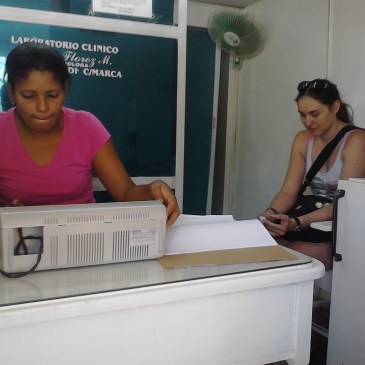
When Colombian babies are born, they are immediately tested for their blood type and that information goes on their birth certificate. Getting my blood type tested I however turned into a big baby. Wedged between Santa Marta´s registry office and a photocopy place is a tiny white shopfront that looks more like a small garden shed than a blood lab. That is where you go to find out your blood type and get an official piece of paper with it written on it, because the cedula process needs official certification of your blood type.
It´s a walk in-walk out type place and in under 5 minutes and for COP$5000 (US$2.50) I came out with throbbing, still-bleeding finger where the attendant had carelessly stabbed me and an official blue card proclaiming me to be O+, the universal receiver.
So while I am the universal receiver, mi novio is the universal giver. I think there´s a fair chance some would also say that´s how our relationship could be described too.
I keep hearing about Palomino. It seems to be the destination on everyone´s lips at the moment. A beach paradise to get away from the crowds and party town of Taganga. When I was first in Santa Marta in 2011 I didn´t hear anything about it, but it is quickly earning a reputation amongst the backpackers and travel crowd as a must visit.
After walking an hour through the jungle, we’re happy to get to the relaxing, floating part of our adventure.
With a day off work and mi novio away, it was the perfect time to visit with mi amiga, a Spanish friend who also lives in Santa Marta. We decided we were both up for a little relaxation that wasn´t just lying on the beach, so we took up the option to go tubing on the Palomino River.
There´s really not much to tubing. You jump in the river with an inflated inner tube and float downstream. It´s gentle, calming and a complete de-stress; that is if you don´t get lost on your way to the river, almost lose your tube to the current, scrape your butt on rocks in the shallows or get toppled over backwards by an overhanging branch.
Our relaxing trip turned into somewhat of an adventure with plenty of laughs and excitement thrown in amongst the peace we were looking for.
We hired our pneumaticos, the tubes, from Eco Andes on the highway next to the ferreteria (hardware store) and got a lift to the normal starting point of Mamasanta. We were told of a second jumping off point that was a 30 minute walk from Mamasanta over a hill and to a small stream where we needed to turn right to get to the river. That sounded like a good plan to us as we would get to enjoy more of the river. We were asked if we needed a guide and we looked at each other with a “surely we can´t get lost floating downstream on a river” look and declined the offer.
This way to the river
With our pneumaticos slung over our left shoulder, to avoid puncturing them on spiny plants located on the right, we started the uphill climb on a narrow trail and were soon puffing and sweating.We conveniently took a breather at a place where you can see all the way out to the turquoise and azure of the Palomino shoreline.
As we descended the other side of the hill there were storybook views of a bend in the river with a wisp of smoke escaping the chimney of a thatched roof hut tucked in the elbow. That was where we were supposed to kick off on the pneumaticos.
Doesn’t this view just make you want to run away to the jungle?
We arrived at the stream and crossed it. I remembered we were told to cross the stream but completely forgot the next direction, turn right. So we followed the trail up another hill as that´s where two Argentinian guys – who somehow managed to zip past us after we left them back in Palomino to walk to the river whilst we had a head start with 15 minute jeep ride to Mamasanta – were heading.
About two-thirds of the way up the hill mi amiga looked at her watch and calculated that we should have been there by now. Conveniently a guide appeared coming over the hill and the Argentinians a few paces in front stopped to ask for directions. The guide said we´d missed the point which was were we planned to go, but that we could keep going and get to another launch point, we just had to turn right where a trickle of water crosses the trail and 20m later find the river.
Mi amiga urged me to press on. Her flip flops were not ideal trekking shoes and she felt the way down would be more treacherous than continuing on. The Argentinians ran off and we continued along the path, luckily finding the right trickle of water to lead us to the river after an hour solid of walking from Mamasanta.
We finally found the river and this little sandy push-off point
We were excited to reach the river, put down our pnuematicos and get to the relaxing part but up ahead we saw an island in the middle and the white wavy water that identifies rapids on both sides. First up, we figured out the logistics, how to carry our few, but important, belongings, slathered on some sunscreen despite the cloudy sky and improvised my scarf/tie as a rope to keep us floating together down the river.
We decided on our plan of attack for the rapids, which was complete avoidance. We eased our way into the oh-so-difficult art of tube floating by making our way to the island where we got off and skirted around the right side of the rapids. Unfortunately these weren´t the only rapids, there were more hiding on the other side of the island. Being two big chickens afraid of these really weeny rapids, we continued the tough going to walk around the rapids. I say tough going because it is difficult to walk in water with rocky bottoms and currents that want to sweep your shoes off your feet.
We were almost all the way across the top of the rapid to a little sandbar where we could launch off when we saw a family of 6 and a guide floating down the river towards us. They had taken the left hand side of the rapids and were riding them. I looked at my friend in open-mouthed incredulity. The two thoughts that raced into my head were, why are we so afraid of teeny little rapids and now we have to share our peaceful journey with this family.
This may not look so scary to you, but when you are 2 minutes into your 2 plus hour float down a river in a rubber tube, no one judges you for erring on the side of caution.
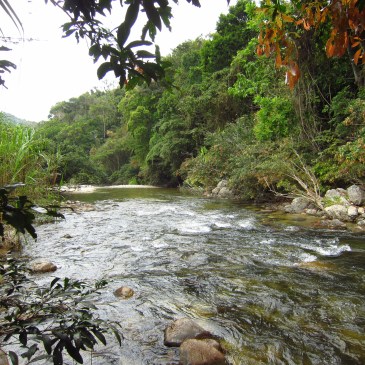
Once finally back on our tubes we got to take in the beautiful scenery of steep, green mountains, rocky river bottoms and clear water. It did truly feel like peace on water with small interruptions of excitement for the rapids (which we now chose to ride instead of avoid). That was until we got to a rock blocking our path at the beginning of a rapid. I don´t quite remember exactly why we jumped out of our tubes into the shallow water instead of riding around it, perhaps it was a fear of piercing a pneumatico on a sharp rock.
Now Tubing 101 tells you that the tube is essential to the activity, and Understanding Rivers 101 tells you that rivers flow with a current. So by way of logic if you let go of your tube, the river will take it away and there will be no tubing and a big problem of how the heck you will get out of there. When we got out of our tubes mi amiga thought she´d lost one of her belongings and was looking around to see how it could have fallen out of her knotted sarong. Meanwhile, the river stole her pneumatico and took off with it. When I, also distracted by mi amiga´s lost item, realised that the tube was escaping I thrust my tube at her, jumped over the rock in the river and bounded on the uneven rocky bottom after it, hurling myself at the black tube, eventually coming up spluttering holding the pneumatico up in one hand and my bundle of soaked possessions in the other. Mi amiga stood in the middle of the river doubled over in stitches of laughter, but I´d saved her ride.
A river so still it shows beautiful reflections. Don’t trust this view. Up ahead are rapids.
After about half an hour we arrived at the point where we were originally aiming to leave from and continued the float, navigating more river hazards of rocks and snags but with smaller rapids. The mountains started getting smaller and the river wider. The current also picked up a bit and formed a nice path, albeit one that took us closer to the steep riverbanks, rock walls and overhanging vegetation. This is where I took a most wonderful backsplat into the water.
We came quickly to a thick overhanging tree branch at head height. I pushed mi amiga in her tube to be further away from the branch and raised my feet while leaning forward to get a kick off and push the branch out of the way. It turns out the branch wasn´t as yielding as I´d expected and instead both the river and its strong current ganged up against me with the branch. Instead of bouncing off the branch, the force of the impact flipped me backwards into the river and out of my tube. When I surfaced I had hold of my pneumatico and still had my cap perched on my head and my sunglasses on my face. Phew!
Calling a short time-out, I recomposed myself on the river bank, coughed up some water and opened my waterproof sack to find my camera still functioning. Thank goodness for drysacs!
With most of the excitement behind us, we managed to float the rest of the way without further accidents. As the clouds refused to let the sun shine for the whole day and with a breeze stirring up, we started to get cold. It´s quite unusual to get chattering teeth around these parts, so we decided that instead of floating all the way to the sea, we would get out at the bridge where the Troncal Caribe highway crosses the river and where a bunch of little kids were doing their laundry on the riverbank by pounding their clothes with a stick. Our rewarding day of peace and relaxation had turned into quite the adventure!
I can´t recommend highly enough tubing on the Palomino River. It is a fantastic break from the beach and takes you into a serene and beautiful part of the Sierra Nevada de Santa Marta. I´m sure ´ll be back again with mi novio and D for more river antics, but perhaps slightly more prepared next time.
What´s there: Palomino is a small village near the beach and where the Palomino River meets the sea. The tubing adventure involves walking in forest and floating down the river in amongst verdant mountains.
How to get there: From Santa Marta the buses leave from the market on the corner of Calle 11 and Carrera 11 every half hour or so and are clearly marked. The same bus also goes to Parque Tayrona. The bus costs COP$8000 and takes around 2 hours. To catch a bus back you can flag down any bus on the highway.
Difficulty: From Mamasanta (the nearest start point) it is easy. If you chose to start further upstream, you just need to be prepared for walking on a hilly trail. At all times be aware of rocks and submerged trees in the river which could puncture your tube.
Time: Depending on your start point and finish point tubing will take between 2 – 4 hours. It took us 4 hours from when we started walking from Mamasanta to when we arrived to the bridge in Palomino.
What to take: Sunscreen, t-shirt, sunglasses, hat (there´s the potential to come back lobster-red if you don´t), bathing suit, bottle of water, sandals – preferably the type that strap onto your feet, a cord or something to use to keep you all floating together, camera, a waterproof bag. We also took sarongs which instantly became wet at the river but were good for keeping belongings tied together and for covering up because walking along the highway in a bikini is not advised.
Where to stay: If you want to stay in Palomino there are a number of accommodation options. I like the friendly new Dreamer on the Beach.
I feel relaxed again just looking at this photo at Dreamer on the Beach
When I got my one year live, work, study visa for Colombia in early February, it was definitely a woohoo moment.
I had been worried about getting it because the reality is that I just want to be with mi novio. Another 6 month separation was not high on the list of tortures I’d be willing to face.
Since I did a fair bit of research, asking couples we know who have been through the process and blog reading into getting a partner visa to stay in Colombia, I want help others out with understanding the process, especially since there are likely to be some changes now the Ministerio de Relaciones Exteriores (MRE) is responsible for visas and not the now-defunct DAS.
What do I need?
A list of the requirements, the process and fees for the Conjugal or Companion to a Colombian National visas can be found on this page of the Ministerio de Relaciones Exteriores website. Note that although there is an option to change the language of the page to English (in the top right corner) the Spanish information is much more comprehensive and detailed.
I had read that there is a requirement to demonstrate that we had been together for 2 years (which we can’t show) however you will note that there is no mention of this on the MRE website which was given to us by a government official at the visa office in Bogotá as the ten commandments of partner visas.
Note that there are two points under Requisitos Especiales which are basically asking for the same document, the escritura publica or marriage certificate.
How do I get the escritura publica?
Perhaps the trickiest document to arrange (aside from any documentation you are submitting to enable you to work in a regulated profession in Colombia) is the escritura publica from the Notary declaring our defacto relationship. I think the pursuit of this document brings you to the ‘living together for 2 years’ request.
In Santa Marta there are three notaries. Notaria 1 said I needed to have a Colombian entry stamp in my passport at least 2 years ago, which I don’t have. Notaria 3 said I needed to have a non-interrupted stay of at least 2 years without leaving the country, which I definitely don’t have. Notaria 2 said yes, she could help us and had processed escritura publicas for other Colombian/foreigner couples.
We were slightly concerned by the differing information from the notary offices, however given that the most helpful and approachable woman at Notaria 2 had helped other couples before led us to take the chance on paying the COP$160,000 fee in order to get the essential document.
All we needed to provide (in addition to the fee) were copies of my passport bio page and the stamp from my latest entry to Colombia, in my case this was just 16 days before applying for the escritura publica, along with notarised (witnessed) copies of your Colombian partner’s cedula (national ID card) and birth certificate.
During this process and in talks with la suegra, I came to learn that in order for a defacto relationship to be recognised legally (and enable access to another’s medical insurance or pension), a Colombian couple needs to live together for 2 years and have family or friends act as referees and sign a document declaring this at the Notaria. I think this is where the ‘living together for 2 years’ idea comes in, even though as foreigners the maximum stay on a tourist visa is 180 days in a calendar year, something I tried to ask politely and without any seed of frustration to Notaria 3.
Getting the escritura publica takes 2-3 business days (or 5 if the Notary’s photocopier isn’t working) and be prepared to go back the day after you lodge the application to sign the documents that will be fed up the signature hierarchy.
The forms
There are two official forms you need to fill in. They are both quite straight-forward and can be downloaded from the MRE website. However, you do need to stick a photo on Form DP-FO-67 BEFORE you go in for your appointment at the visa office. Thankfully there was a gluestick at the reception for this very purpose when I had my appointment. You wouldn’t want your application being rejected for failing to stick your photo to the form (could that possibly be the smallest infringement?).
Do the copies need to be witnessed?
This is something important that isn’t actually detailed on the MRE website, however I found this handy helper on the Government of Colombia website which tells you whether you need the original, a photocopy or an authenticated copy of each document.
There are two ways the Notaria authenticates copies, one being sighting the original card or document and signing a stamp to verify the copy. The other, which is for the letter your Colombian partner needs to write requesting that you be granted a visa, is where your Colombian partner needs to sign a declaration stamp and then put a fingerprint on the document certifying it’s trueness because it is an original and not a copy of something else.
Any notaria can authenticate documents.
What do you write in the letter?
Mi novio was at a bit of a loss as to what to write in the letter, so I suggested he include my full name, nationality and passport number in the content, along with a statement that we have a genuine relationship and I need to live in Colombia for us to have a future together. It doesn’t need to be a long letter, just the basics and a short statement about why your Colombian partner wants you to have the right to live in Colombia.
How much does it cost?
Budget approximately COP$550,000 or US$300 for the visa process and more if you need to travel to Bogotá to lodge your application.
Escritura publica: COP$160,000
Non-refundable visa appointment fee: COP$93,000 *not exact because it is based on currency conversions from US$50, called the estudio, or study fee
Visa fee: COP$250,000 *not exact because it is based on currency conversions from US$160
Witnessing: approx COP$20,000
Passport photos: approx COP$5000 – $10,000
Photocopying of documents: approx COP$5000
How does the appointment process work?
The only place you can apply for this visa is at the office in Bogotá. Check carefully the address and opening hours of the office on the MRE website. You cannot make an appointment time, you have to just show up.
Whilst we wanted to arrive early at 7:30am when the visa office opened to avoid long queues, we needed to get one more document witnessed and the closest notary to the visa office didn’t open until 8am. Instead we arrived at 8:30am and found fewer people waiting than when we’d stopped by the day before to double-check we had all the right information and forms.
When you arrive at the visa office you need to present your passport and get a turn number. You will then receive a receipt to pay the visa appointment fee (what they call the estudio fee) at the next Banco Sudameris booth. After making your payment you find a seat in the waiting room and wait for the electronic turn system to announce your turn.
When it’s your turn you make your way down the corridor to the desk number mentioned on the turn system. I’m sure I shouldn’t need to say it but a smile, buenos dias and handshake for the immigration official should be top of your greeting checklist.
I was asked when I first arrived in Colombia and what my profession is and we were asked how we met, how long we’d been together, what our plans were, were we planning to get married and other questions along these lines. I was honestly expecting a more hardcore interview where we were interrogated separately about our likes and brands of deodorant (even one viewing of Green Card is enough to leave a lasting impression) however it didn’t come to that. I guess our honest and friendly answers and the fact that mi novio had visited me in Australia to meet my family and friends, was enough to convince the official that we have a genuine relationship without having to have a public pash fest (not advised, by the way).
After our conversation the official sent us back out to the waiting room while he looked over our documents and application. About 20 minutes later, he called us back and said that I had been granted a one year visa to live, work (in a non-regulated field) and study in Colombia. We were elated! With this news, we had the option to pay the visa fee by card or cash. Paying by VISA card (they don´t accept MasterCard) is the instant option as paying in cash requires going back out the bank booth and the interviewing official can take a card payment on the spot.
I then got a shiny new visa stuck in my passport and mi novio was told that I am his responsibility while in Colombia. Thankfully he wasn’t scared about the can of worms that could possibly be! I also think he’s secretly quite pleased that his name now appears in my passport on my visa.
More information
According to the MRE website, you can be granted a visa of up to 3 years, which is at the discretion of the immigration official at your appointment.
There is no such thing as renewing this type of visa, you have to go through the process from the beginning again at the end of your visa.
The escritura publica confirming your defacto relationship can’t be older than three months, therefore when you need to apply for a new visa you need to get the escritura publica again from the Notaria.
There, I feel better for admitting it. Despite how much I’ve tried tell myself “but this is Colombian culture, you’re not open-minded enough if you can’t embrace it” I will always intensely dislike this incessant, squeaky, loud, monotonous music that is only ever blared out of oversize speakers at a decibel warning level.
How did I finally come to confess this you may ask. Well, my day started like this:
Ahhh, Sunday, you beautiful sleep-in of a day with only relaxing things to do. Oh, except that I have to take D to a soccer game that starts at 7:50am. And we can’t go on the motorbike because it is waiting for my brother-in-law to fix it with his magical mechanic hands. So we’re up early. Although the funny thing is I didn’t need an alarm clock because the neighbour two doors down started the music up at 6:40am. Did I tell you it is Sunday?
Normal people (ie not costeños) would think twice before spinning the volume dial on their music up until it spins no more. Even more so you would expect this consideration when you live in a laneway that isn’t even 2m wide and every house is a terrace house, wall beside wall. But our fabulous neighbours have instead brought out their mega speaker to the front terrace, aimed it in the direction of our house and found the limit on the volume dial. Playing vallenato. That music I hate.
I couldn’t hear la suegra talking to me across the lounge room, and it wasn’t even 7am. I couldn’t even hear myself think. My brain started to crackle and frazzle with the fast accordion scratch and grate. Ooops, here arrives my bad mood.
I went to the corner store to buy breakfast supplies and my face withered into a sour, glowering scowl as I passed the neighbours sitting out the front of their house with their ears pressed up against the mega speaker. Perhaps the sound isn’t as loud as it is in their terrace as what it is inside my house. Maybe I should invite them to our lounge so we can shout at each other from the couch to the chair and continually repeat “que?“
Unfortunately for me vallenato is the most popular music in Santa Marta. It screams at me from bars, shops, buses and of course the neighbours’ stereos. I long for a bit of Latin pop, the other neighbour’s old time ballads or even ranchero, Colombian country music mi novio sings along to badly, but the vallenato is escapable. Like the bad mood it brings on. I detest it so much I can’t even bring myself to search for a song to link to so you can experience it yourself and really know what I mean. Sorry but you’ll have to do it yourself (don’t worry, it won’t matter what song you find because they all sound the same).
I’m in serious need of a coping mechanism for dealing with the obnoxious sound, but can’t seem to find a calm space while it vibrates in my brain. I tell myself that if it is played at a normal volume it wouldn’t be so bad, but that’s never going to happen and I have to resign myself to living with vallenato.
Do you have any strategies for how I can accept vallenato and not end up strangling my neighbours? Or what would be the best annoying music for me to play at max volume on the terrace (assuming I had a super mega high wattage speaker)?
*Disclaimer: I don’t actually want to strangle my neighbours – it’s just a figure of speech – because except for the inconsiderate vallenato they are nice and always greet me with a buenas or adios when I pass with a non-vallenato-soured face.
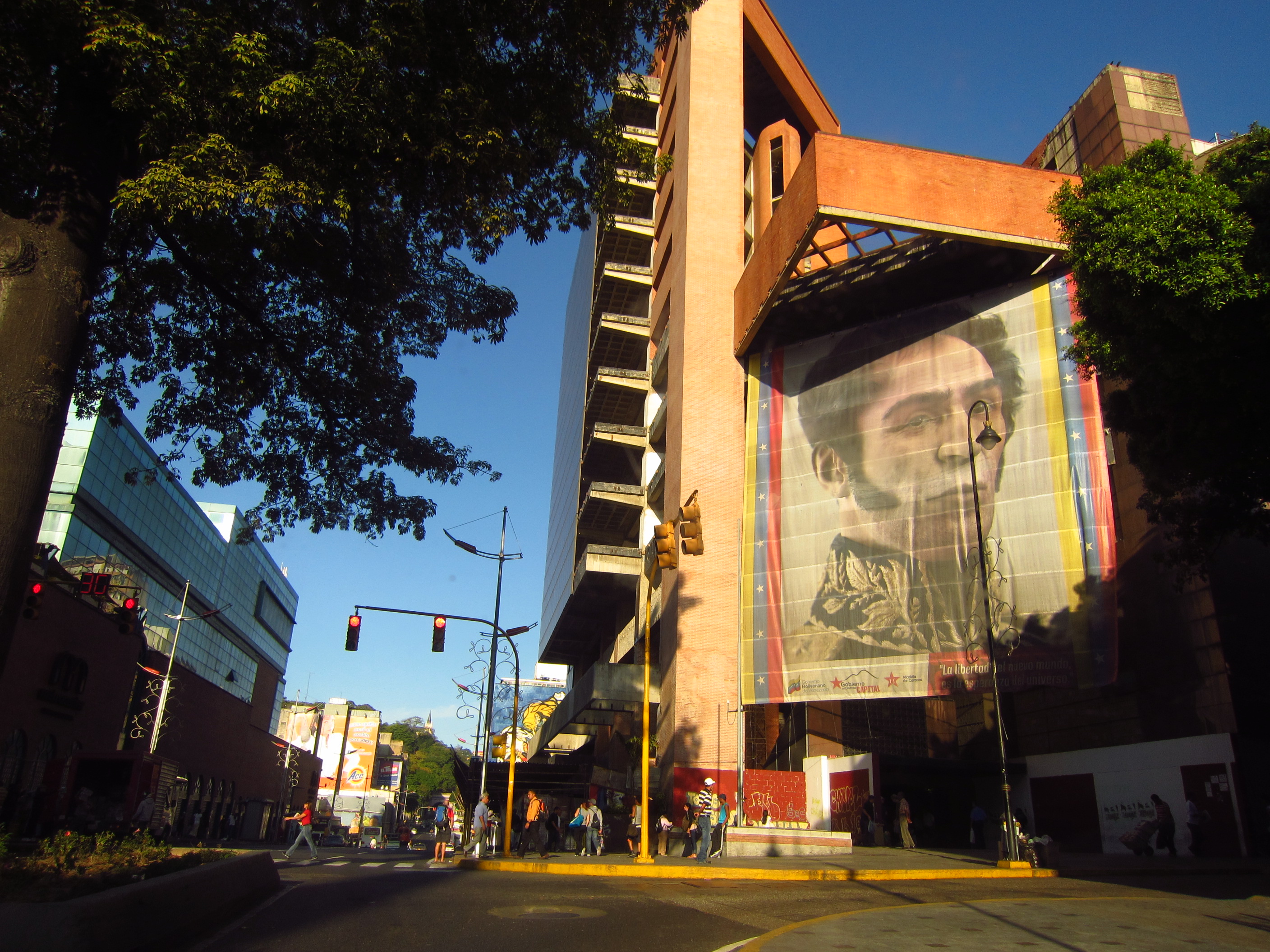
Arriving in Venezuela to collect D after his summer holidays with his mum I was struck by two figures hogging the limelight. Hugo Chavez and Simon Bolivar. One is dead and the other is potentially on his deathbed if the conspiracies prove true.
Simon Bolivar is an important figure in Latin American history leading the revolution and liberating Venezuela, Colombia, Panama, Ecuador and Bolivia from Spanish rule. He is forever linked with Santa Marta because he died here 182 years ago but he lives on in Venezuela with incredible monuments, museums, pictures and in Venezuela’s official name of the Bolivarian Republic of Venezuela, changed by Chavez in 2000. Just about everything seems to be Bolivar this and Bolivarian that.
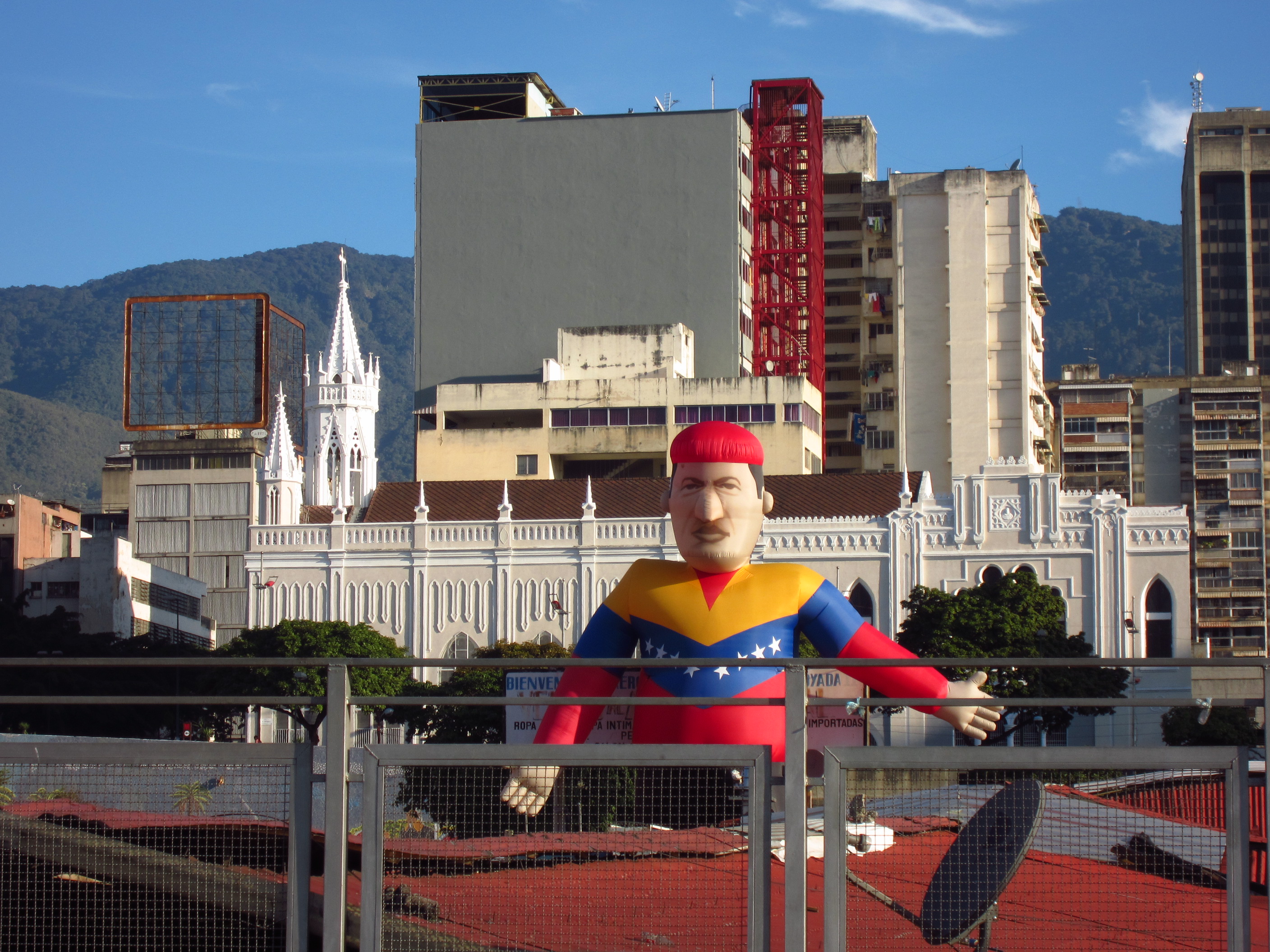
Hugo Chavez, the much-loved and much hated president of Venezuela, is omnipresent. From the giant inflatable Chavez in the centre of Caracas to everyday conversations and the “I am Chavez” billboards you see evidence of him everywhere except in person as he’s currently convalescing from complications due to cancer surgery in Cuba. We arrived on the day of his supposed inauguration as President for the sixth time, but given that he hasn’t been seen publicly since before Christmas, the ceremony has been delayed until he is recovered.
I felt uncomfortable in Venezuela, and not just because we had to borrow money of D’s mum because we hadn’t changed enough at the border and didn’t know it was so difficult to change inside the country. I got a sense of great disorganisation. I looked around and saw election propaganda from the elections last year, but felt as though nothing flowed through to benefit those living around the painted walls. We were told that it’s not safe to venture out in Caracas in the dark of night or early in the morning and this was verified by people arriving by bus in Caracas pulling up seats in the terminal to wait for the sun to rise when they would start making a mass exodus to the taxi ranks. We bought skinny empanadas from a lady who told us that flour was being rationed and they could only buy 2 bags of flour. We endured more than 5 army and police checkpoints on the way in and out of the country, compared to just one on the way in to Colombia. I froze on the overnight buses that have the air conditioning locked onto a temperature even colder than Colombia’s overnight bus.
I might still be suffering from memory burn of our 11 day bus trip in October, but the 3 nights out of 4 we spent sleeping on buses and the good 16 hours spent in bus terminals were extremely uncomfortable. Thankfully we did have a lovely day at the beach near Caracas with D’s maternal grandmother, aunt, uncle and cousins who were so welcoming and hospitable up to the point where D’s cousins started calling me tia which means aunt.
Neither mi novio or I am keen to return to Venezuela any time soon. I still want to go to Angel Falls and do the Simon Bolivar history trail in Caracas, but I think that can wait until I’m ready to tackle the challenges Venezuela throws up. Right now, I’m super happy to be back in Colombia. It’s like a breath of fresh air.
It’s amazing what you’ll find if you follow some random road.
Mi novio is in love with our motorbike and so when we had a Sunday with no plans, he suggested a trip to the beach. Being smack bang in the middle of high season with the beaches jammed with visitors and locals making a paseo, I suggested we head for the hills instead. So we set off in the direction of Minca.
On the ride uphill we passed a number of balnearios, or swimming holes in the river that are much like your local swimming pool. Some have been fortified with concrete and have restaurants and bars. All have loud vallenato music blaring and so it’s best to press on to find nature at its best.
Minca is a lovely and tiny town in the Sierra Nevada de Santa Marta and sits at about 600m above sea level. The climate is fresh and the area abounds with coffee farms, forest and bird watching. If you’re looking for a place to chill out, Minca certainly offers that.
After crossing the bridge over the Minca River, we took the road to right and rode past the church and a few small market stalls set up under the trees. At the end of the strip of buildings, the road continued and was paved – or rather the two tyre ruts were paved. I asked mi novio what was up ahead and he didn’t know, so we decided to find out. We followed a 4WD ute with a bunch of Colombians in the back for a while and as the road got steep, bumpy (and unpaved) and too much for our little scooter with 2 passengers, we passed a group of people on foot. Clearly there was something worth seeing up ahead, but what, we had no idea so we asked. It turned out there were waterfalls.
I am a sucker for waterfalls. I really love them. Mi novio had no choice but to continue and I had no choice but to get off and walk a few of the steeper sections of road to avoid overheating our poor motorbike. After a good 20 minutes on the motorbike we came to the turn off to Marinka Waterfalls. A vendor was selling snacks on the roadside and as we stopped for a coca-cola I got bitten by tiny little mosquitoes which made me wish I had brought repellent as well as sunscreen. The mosquitoes only seemed to be at that one spot, and as we parked the bike and walked the last 400m to the waterfalls thankfully they disappeared.
As with most natural attractions in Colombia, you couldn’t just discover the waterfall in its natural setting. A couple of roofed huts have been added, with one serving a rustic set-menu lunch. I was pleased to be charged the Colombian entrance fee rather than that for foreigners. If I just keep my mouth shut and let mi novio do all the talking, I can often get away with this.
The waterfalls have two drops, a cascade of about 20m and a drop of about 10m, into pools that you can swim and relax in.
We didn’t really spend much time there, but had a bit of a swim and relaxed while marvelling over our random discovery because even mi novio didn’t know about this waterfall.
As we were leaving the site we came across four almost elderly people who we’d seen struggling at the turn off. They had walked all the way from Minca to the waterfalls and then refused to pay the entrance fee and so were turning back around. They argued that you shouldn’t have to pay to see nature and the guy collecting the entrance fee said that the site needed to be maintained. Whilst I agree with their sentiments, I know it is common to have to pay. During my roadtrip in the US, I visited a lot of national parks and each had an entry fee (although buying an annual pass is much more cost-effective if you plan to visit a few US National Parks). However at the end of the day, I think if I’d spent an hour or more walking uphill in the heat, I would pay the small entrance fee to cool off rather than turn around in stubborn defeat.
What’s there: Waterfalls, swimming and a walk in the Sierra Nevada de Santa Marta
How to get there: Take a collectivo to Minca that leaves from Calle 11 and Carrera 12 near the Mercado in Santa Marta between 8am and 5:30pm (COP$6000, US$3.40), a mototaxi or taxi (COP$40,000, US$22.60 from Santa Marta). Cross the bridge over the Minca River and take the road forking to your right past the church. Continue following this road uphill for about an hour. Just after you ford the river, you will see a stall and signs to Marinka Waterfalls on your left. If the walk is too much, you can also hire a mototaxi from Minca to take you there.
Entry fee: COP$2000 per person (US$1.10) for Colombians or COP$3000 per person (US$1.70) for foreigners
Hike difficulty: Moderate. The path doubles as a road but the walk to the waterfalls is uphill.
Walk time: Approximately 1 hour from the church to the waterfalls.
What to take: Sandals or walking shoes, water, sunscreen, snacks, money, bathing suit, towel and camera.




 a little cameo