A bit about driving

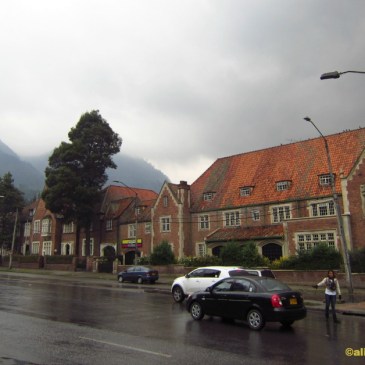
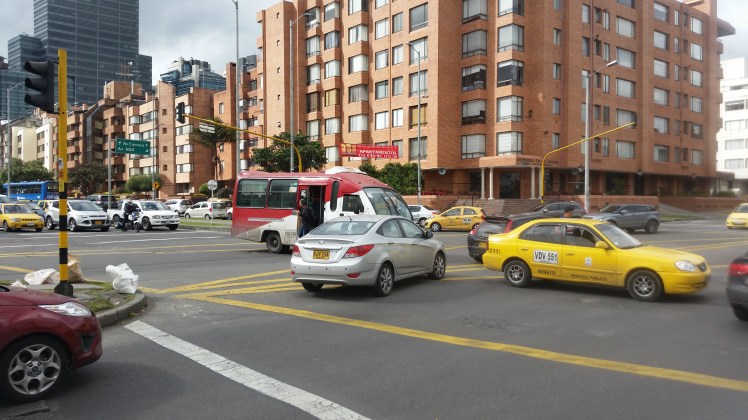
Bogota trafficI always thought that Colombian drivers were terrible. Period. No ifs, buts or exceptions. However since buying a car last year and having experienced Colombian roads from the driver’s seat, I’m prepared to cut them some slack in the driving stakes.

I’d long held the belief that Colombians received their license in a Weeties pack (although of course there are no Weeties here), yet in actual fact the current requirement is that they complete a 30 hour course and pay more or less a monthly minimum wage for the privilege. That’s pretty intense and quite a commitment.

I won’t deny that at first I was afraid of driving here. I told Edwin that we would buy an automatic, because there was no way that I was going to drive in Colombia – on the other side of the road for me – and try to think about changing gears in Bogota’s infamous traffic. I had a car and drove in the US for six months, so I wasn’t a complete newbie to driving on the right hand side of the road, but I was still petrified at joining the chaos on the roads.

Getting behind the wheel was a huge lesson in understanding the challenges that every single driver faces and it made me realise that I’d been a little too hasty in my judgments about Colombian drivers.

  1. When there are no lines marked on a 4 lane road, how do you expect people to stick to their lane?
  2. When there are large, car eating holes that suddenly appear before you in the road, how can you not swerve to miss them?
  3. When speed limit signs seem to have been selected at random and placed 20m apart by road workers, how can you expect people to know how fast to drive?
  4. When street parking is as rare as hen’s teeth, how can you be expected to do drop offs and pick ups without holding up traffic?

While I’ve cut some slack to Colombian drivers, there still remain some eternal frustrations that make driving a not-so-pleasant experience.

  1. People who think it’s okay to drive in the fast lane (ie left hand lane) of a 2 lane highway and never pull into the fa right hand lane to let faster traffic past – especially when they choose to travel at 50kmph.
  2. 85% of drivers* do not use their blinkers (indicators) to change lanes or turn into streets.
  3. The people who beep their horns for the cars in front to take off from the traffic lights when the lights are still red.
  4. Never giving way to pedestrians at traffic lights – every day as I walk to work I am almost hit by a turning car that refuses to give way to me.
  5. Drivers with a complete disregard for their children’s safety letting them bounce around the car unrestrained, or in the arms of another passenger, or even worse, allow them to sit in their lap in between them and the steering wheel.

This last one makes me very angry because if you can afford to buy a car, you can afford to buy your baby or child a car seat.

I’m also quite baffled that everyone parks in reverse. In my home state of Victoria the only reverse parking people do is to get into a parallel park on the side of the road. Upon telling Edwin he could drive frontwards into a carpark he told me that he simply cannot park forwards, he can only park the car in reverse. Bizarre. I think it takes longer to park in reverse, and it gets very frustrating when you have to wait some time for a big SUV to manoeuvre their car into a narrow space using three or four line ups so you can pass and find a space. Surely putting the nose into the park and not having to rely on mirrors or a passenger to get out and guide you in would be far easier.

I’m still not super confident driving in Bogota and I leave most of that driving to Edwin while I crochet the time away, but I’m getting better and am starting to take the car out more, although only when I know I can easily find parking near my destination. The suddenly appearing motorbikes remain a cause for concern and driving anxiety, as do the even more unpredictable buses. But the best part of having a car is that I again feel like I have freedom. I can get in the car and go somewhere if I want to. We can go away for the weekend or on daytrips or longer trips as a family. We had the same feeling of freedom when we got the motorbike in Santa Marta, but unfortunately 3 don’t fit on the motorbike.

A car is not a necessity in Bogota for us like it was for me in Australia or the US. We live close to my work and to shopping centres so I don’t have to drive there. We managed to live in Bogota for almost two years with just the motorbike, public transport and our own two legs, so even though our car spends most of the week without leaving the garage, it’s handy to explore the outskirts of Bogota and pick family and friends up from the airport.

Now that we have 4 wheels and 5 seats, the motorbike has become Edwin’s runabout taking him to classes and work and filling in the gaps when we have pico y placa (restrictions on driving the car depending on the date and the last number on your numberplate). I’m not sad to no longer ride the motorbike, quite the opposite in fact, because even if it is faster in traffic jams I feel safer and more comfortable in my own private metal bubble.

 * so I made this up, it’s a fictitious statistic most likely for exaggerated purposes, but it feels very realistic to me.
Stop it Bogota, you’re making me homesick

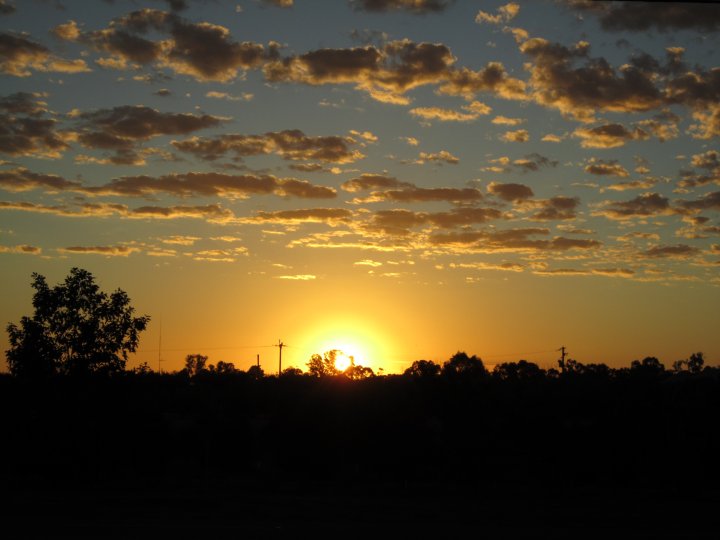
Mildura sunrise
I’m thinking about home

The past week in Bogota can only be described as glorious. The skies are blue from the mountains in the east stretching out west across the sheet plains of La Sabana. The weather is warm, a little too warm to fall into Bogota’s usual weather cycle.


When you step outside into the bright day, the warm air clings to you, offering up a gentle caress that you know could soon turn to a Chinese burn. At 2600m the sun has the same strength as in my land under the hole in the ozone. Slip, slop, slap.

This wave of homesickness hits me as I think of my hometown. It’s summertime there now. The temperatures there are pushing 40 degrees Celsius, but this unusual heat in Bogota, which is really only about 25 degrees, takes me to an Australian summer.

I can smell the sausages sizzling on the barbecue and feel the contrast against the tossed salad, cold from being in the fridge. I relax into the heat and see sunlight sparkling on the river where I’m waiting with my toes in the sand for my turn to waterski. I flinch as I feel the spray from the misters at the beer garden touch my hot skin. I can feel the delight as a cold bubble of water floats downstream, breaking up the warm surface water. I’m squatting beside the road by a tar patch with tiny bubbles on the surface and I can smell the tar as I pop the bubbles with my fingertip. I get sleepy as I sink into the carseat, the hot, trapped air lulling me into slumber.

But here I am, just basking in this glorious weather. Breathing in the lightness of the air that reminds me of holidays, and a slower pace of doing things.

The news talks about this strange weather, that bakes us during the day, and then in neighbouring farm towns just 40km away how it frosts the pastures with minus 3 degrees at night. It’s part of El Nino they say.

My phone tells me it’s cloudy and 5 degrees Celsius, but then again, I never look at or believe the weather prognostications here and at least another 20 degrees needs to be added to even be in the same ballpark as what’s outside my building right now.

This weather has taken me on a nostalgic journey back home. Usually I’m used to the weather nostalgia in name only as Bogota’s predictable four seasons in one day (twice over) is in line with Melbourne’s fame for having four seasons in one day. But now I’m reliving summers of my hometown, and desperate to cling to this sensation.

While this nostalgia brings me a certain sadness, the perfect weather is giving me an energy that was absent. I wake up with a smile and open myself wide to embrace what I’m sure will be a great day.

A lesson in leaving Colombia with a minor

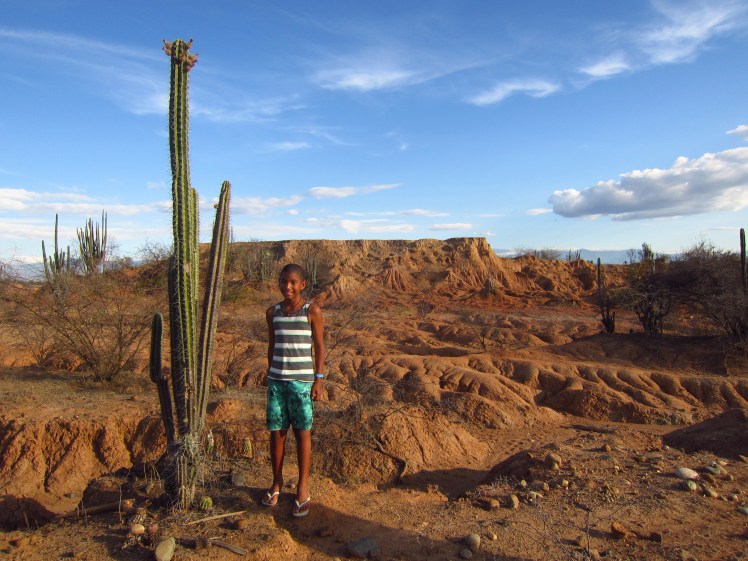
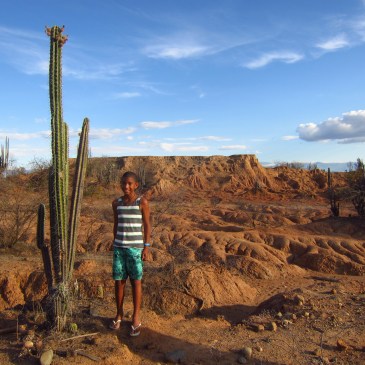
Desierto de Tatacoa, Colombia
It’s not quite Central America, but a new experience nonetheless. Desierto de Tatacoa, Colombia

Leaving Colombia and getting an exit stamp in the passport of a Colombian minor isn’t a straightforward process. Colombia has very stringent laws in place for travelling children, and rightly so to keep them safe from kidnapping or trafficking.

We  understand that our situation is a little more complex than some others as when a child leaves the country with only one parent, there are a lot more forms and processes to follow. Given that D’s mum doesn’t live in Colombia, matters are further complicated as we can’t get her to sign the Migracion Colombia permission form in the presence of a notary when we plan to travel.

With our sights set on taking D on international holidays, Edwin organised with D’s mum to get an escritura publica signed at the notary office when she was last in Colombia. The escritura publica is essentially a legal document that says that D can leave the country with Edwin for tourism purposes until he turns 18. Since it’s within D’s mum’s rights to annul this document and retract her permission at any time, we knew we had to get a copy from the notary’s office within 30 days of our departure date, which we duly did.

Rules, regulations and laws are prone to changing frequently, so rather than rely on our understanding of the requirements, Edwin went to the Migracion Colombia office in Calle 100 and spoke with a childen’s lawyer, showing her the documents we have. She said that all the documents were in order and that we would have no problems leaving the country with D. Edwin asked again if there was anything else we needed, and she said no, the escritura publica and his birth certificate were sufficient.

But it wasn’t.

After checking into our Christmas Day flight to El Salvador and lunching at Crepes and Waffles, we approached the immigration booth to get stamped out of Colombia, handing over passports, boarding passes, the escritura publica and D’s birth certificate. We knew something was up when the officer moved away to an office with our documents, and we started to get a sinking feeling.

When he came back he said we were missing a section validating the escritura publica and led us out of the quarantine area to the Migracion Colombia office beside the check in section of the terminal, handing over our documents to another officer.

We weren’t the only ones there in that office, and it appeared that all the cases were regarding children.

The officer explained that what we were missing was a nota de vigencia, a seal from the notary’s office saying that there was no amendment or annulment on record for the escritura publica. She showed us a copy of another traveller’s documents to explain what that was. What we had was a photocopy of the document from the notary’s records, and a notary’s authentication of that document. But no nota de vigencia.

The sinking feeling deepened into dread.

Edwin explained to the officer that he had gone to Migracion Colombia in Calle 100 just 10 days prior and was told his documents were in order by a Migracion Colombia official. Still there was nothing we could do, and the only thing the officer could do was include his claim in the report on the incident and encourage him to make a formal complaint at the office he had visited regarding the incorrect advice received.

So we were denied departure to Colombia because when we’d gotten the copy of the escritura publica, the notary hadn’t added the seal. Or maybe we were supposed to ask for a nota de vigencia instead, I’m still not clear.

With heavy hearts we left the office, spoke to the airline regarding our tickets and luggage and when we found out that the plane had to leave before we could get our bags, we took a taxi home to think about our options.

Before returning to the airport and after being able to process what had happened, we had devised a plan B. Given that it was Friday, we wouldn’t be able to get a nota de vigencia from the notary in Santa Marta until at least Tuesday, which would reduce the days we had to travel, and it would cost an extra US$150 per person with the difference in fare and the ticket penalty. We had our bags packed already so we decided to do a roadtrip instead, taking advantage of our time off to visit the South of Colombia which none of us had visited before.

The reality hit poor D – who was very excited about our trip and getting on an international flight – when we went back to the airport to collect our bags and he was glum until we got to our first stop at Desierto de Tatacoa the next afternoon.

I would hate for this to happen to you and ruin your holiday or travel plans, so here are my tips for reducing immigration heartache in Colombia with Colombian minors, which we will certainly be following  next time.

  1. If possible, check your documentation ahead of your flight with your port of departure. Next time we will be going to El Dorado Airport in Bogota to check our documents as they are the people that see these cases every day.
  2. Carry a copy, or even better multiple copies, of the child’s birth certificate. This is because the officers need to know who the parents are. We overheard another case in the airport where a 15 and 17 year old were travelling with both their parents and they didn’t have their birth certificates to prove that the two adults were their birth parents. The officers were prepared to accept scanned copies saved in an email, but the family didn’t have that either.
  3. If you are visiting multiple countries, take a copy of documentation to travel with the child for each country as Migracion Colombia keep the copies of your permission form (the per-trip authorisation by both parents – the Migracion Colombia website should have a template for download) or your escritura publica. I think they also keep the copy of the birth certificate.
  4. Make sure if you have an escritura publica authorising the child’s travel with a particular parent, that you get a nota de vigencia from the notary as well.
  5. As I’m not sure of the process if you are travelling with non-Colombian minors, you should check with Migracion Colombia what they need.

If you have any other tips or have a Colombian immigration experience to share, please feel free to leave a comment.

What’s in a name

I’m one of those people that is quite attached to their name. I really like it and I’m ever so thankful that Dad stumbled across the name on an American waterskiier competing at Moomba and managed to steer the namingship away from Digabeena, which was my mother’s choice for feminising Digby.

I’ve often been called Camilla, which, to be absolutely clear, I do not like to be called. A girl at high school once said to me after I’d told her not to call me Camilla that it just rolled of the tongue more easily than Camille. I think my muttered response was to put the brakes on her tongue.

One of the things I like about my name is that it is not common. I know of a couple of Camille’s but have only come across someone with the same first name a handful of times in my life. Perhaps that uniqueness is one of the reasons why I, shamefully, was distressed about being placed as an advisor in college alongside a guy called Kamil. Thanks to my response, the lesson in taking my name’s uniqueness too seriously was repeated as I now work alongside a guy called Camilo (and I’m pleased to say that I didn’t have the same reaction to the situation fifteen years ago, but rather was able to see the funny side of it).

Here in Colombia I have had to deal with the Camilla saga all over again, as Camila is a popular Spanish name and every time I say my name they think I’ve said Camila. To make my life easier, I told my Colombian family to call me Camil-ee, pronouncing the normally silent ‘e’, which was a good way of establishing that my name is not Camila.

I have also started to simplify it even further in cafes where I have to give my name and always use ‘Cami’, a common short-form of Camila or Camilo here. However, despite my best attempts, every time I say ‘Cami’ at Juan Valdez, they always need me to repeat it. Perhaps it is because they don’t quite believe that is my name because I don’t believe that my accent in Spanish is that bad.

A couple of weeks ago I was at a busy café and ordered my lunch to takeaway. They had also implemented the name system, and I said ‘Cami’ to the person behind the counter. I then sat and waited to hear my name called out.  I waited, I heard someone call out Carmen, then I waited some more, heard them call out another name and then I realised that my name had been written down as Carmen. When I approached the counter I said I thought they’d gotten my name wrong and was that a tex-mex burrito as that was my order. They were a bit reluctant to give it up and I repeated a number of times that my name was Cami not Carmen. I eventually got my burrito, although I left in a cranky mood.

I went back to that café again this week and stood patiently in a really long line to order the tex-mex burrito again. To get my revenge from the last visit, I said my name using my Australian accent, not providing any concessions to the Colombians behind the counter. I was asked to repeat it and said it exactly the same way. A look of confusion flit across the girl’s face, but she didn’t say anything more.

I sat down to wait, and made sure that I paid attention to the customers who were in front of and behind me so I didn’t miss my lunch being called out. Only my name never got called out. Instead the girl handing out the orders just held up her hand and waved at me. I’m not sure whether any name was even attached to my order, or whether they remembered me from last time, or whether I was just the only foreign looking person in the café. At least I left this time with a sly smile and a win instead of with an argument.

Walking back to the office I thought of a friend who regularly posts photos of the botched names she gets on her coffee cups in different places around the world. I’d really love to know if someone has researched if using names actually makes people feel more connected to the place, or whether the incorrect spellings or pronunciations outweigh the positives.

I’m not even going to say that the incorrect name issue is an expat or foreigner experience – although many expats would have plenty of tales to tell about having to repeat their names and spell them out all the time – because there are plenty of Australians whose names I would not be able to spell or necessarily even understand. And when the shoe is on the other foot, I’m also guilty of mis-hearing peoples names here, and although I’m more familiar with names in Spanish speaking Latin America now, I get lots of names wrong when I’m in Brazil. I’m therefore always thankful when there’s an exchange of business cards!

How do you adapt your name or the pronunciation of your name when you are in a foreign country?


The evolution of the wheel

I’m completely amazed. Walking out of work today I saw a guy pass by riding a wheel. A wheel!

So astonished was I that there is no photographic proof that man has progressed from the creation of the turning wheel to riding the wheel itself.

The wheel is like a unicycle crossed with a Segway, and about the same size as that of a unicycle or foldable bike wheel. Either side of the tyre are footholds to stand on, but there are no handlebars to steer. And it magically glides along the footpath.

My jaw dropped open. I looked around to see if I was the only person to witness this strange apparition on this new invention. A brief thought flitted through my mind “have I just travelled through time?”.

After recovering from witnessing this miracle I got to thinking – will we one day be teaching our kids to ride a wheel, not a bicycle? How far will we continue to advance in my lifetime?

It looked like a tricky business, but the guy made it seem effortless, and (hat’s off to him) he was wearing a helmet, which is good to see that he practices responsible wheeling.

Is ‘wheeling’ a new thing, or am I just one of the last to be surprised by this mode of transport?

A Baptism

We received the invitation to be the godparents of Edwin’s nephew by WhatsApp while visiting the monastery near Villa de Leyva with my Mum and sister. Edwin wanted to respond straightaway and pressured me for a response, when I just wanted to have a discussion in private. Surely receiving an  invitation by text message rather than a phone call is an indicator that an instantaneous response is not required.

I never expected the privilege and to be honest I thought our duty was done when one of the two names we suggested for the baby was selected. I can’t say I was overly keen to have this responsibility.

Anyway, an enthusiastic Edwin responded with a phone call to the affirmative, only adding “it’s an honour” as I wildly gesticulated that he needed to include that phrase for politeness sake.

We didn’t hear anything about the baptism for a while after that, not until Edwin and I were chatting about the looming date and I said that his sister and brother-in-law had to check with the priest about the requirements and that they needed to know that I’m not Catholic, because imagine if I turned up to the baptism only for the priest to say the godparents had to be baptised and confirmed Catholics. I was also not willing to perform any kind of religious act to turn me into an eligible fairy godmother should this have been the requirement for the job. My thoughts on religion are at opposition to my spiritual beliefs and I was not disposed to put myself into a hypocritical position solely to appease others no matter how many family feathers it would ruffle. As it turned out, there was no issue with my non-Catholickness at all.

On the day of the baptism we raced back from having our hair and nails done in town to meet with the priest at 2pm prior to the 3pm baptism. We were 15 minutes late and the priest was nowhere to be seen. Edwin’s brother-in-law put in a call to him only to be told that he would be an hour late, and therefore also late for the start of the baptism.

My anxiety levels were probably the highest at this delay, although the Colombian anxiety was regarding the possible lateness of the start to the birthday slash baptism party at 4pm and the concern that guests would be turning up to the party and we would still be in the chapel. I couldn’t quite grasp this reaction, as surely the party invitees had also been invited to the baptism and would be in the chapel with us. If this wasn’t the case, then that is like rocking up to only the wedding reception and not the ceremony – plain rude.

While we waited, we went to check out the party site where the decorators were no more advanced than before we had gone to the beauty salon. They had been there since 6am, supposedly to decorate, but what they did could have been done in 2 hours, maximum 3 hours. It’s another shining example of wasted efficiency and perception. The party place sells the decoration and entertainment package saying that the decorators will spend 10 hours decorating the venue to your theme, instead of just saying “we will decorate your venue for $X” and then send the decorators out there for 3 or 4 hours and then to another party for another 3 or 4 hours that they could make more money from. Because of the apparent ineptness, I’m also sure that the impressive George the Curious balloon tree filled with cute balloon animals came ready made from the shop, as the decorating guys couldn’t keep the other balloon bouquets from escaping in the wind and popping on the grass.

At 3pm we drove up to the chapel to greet arriving guests. After almost three years in Colombia I still have the foolish expectation that people will arrive on time for important events, yet Edwin’s brother-in-law’s family only arrived at 3:30pm. It didn’t matter anyway because the priest didn’t show up until 4pm, and dispensing of any pleasantry or need for consultation with the baptism’s protagonists, went straight to put on his robes and then called the parents, Edwin and I to the front and launched straight into the ceremony as though the devil was snapping at the heels of the toddler.

I’d never even been to a Catholic baptism and all of a sudden I found myself a participant in one, in another language to boot. I had been counting on the pre-ceremony pep talk with the priest to help guide me through the experience. Thankfully the priest was very instructional about what to do. He told us ahead of a passage that we had to say “Si, renuncio” or “Si, creo” and thankfully I understood when I had to make the sign of a cross on the toddler’s forehead. I also think that most people would recognise the Lord’s Prayer in any language just from the melody of the lines. It was over in 15 minutes and then we were rushed to the priest’s office to provide our names for the baptism record where the most conversation we got was when the priest asked if Edwin and my sister-in-law are siblings after seeing the identical surname structure.

It was then off to the party to sit awkwardly in rows around the perimeter of the open-air venue and watch the children’s activities and entertainment. At any Australian kids birthday party, the parents will mingle with others and the parents of the birthday child would introduce people to each other, with the children’s activities not necessarily the central focus for the adults, however here, once you had a seat, that was it and adults only spoke to those either side of them. I didn’t even see my sister-in-law go around and talk to the parents of the invited children. Come to think of it, at an Australian party, there is always a food and drink table, where while a plate may get passed around every now and then, each guest can go to the table for a nibble or a top up and circulate. The seated and served nature of a Colombian party is far less sociable.

Balloon tree
The sad story of the balloon tree

Just before the parents gave their speeches of thanks, the pinata came out. I always thought a pinata had to be whacked with a stick for all the lollies to come bursting out, but in this case, the contents of a container were tipped over the kids’ heads and they were sent scrambling for a prize amongst the confetti and streamers. Once prizes were claimed for those lucky enough to have snatched one up, the kids started sweeping around on the floor with the contents of the pinata and it was precisely at this moment that they turned into destructive little feral monsters pulling all the animals off the balloon tree and then pulling the tree apart. It was as though a consolation for not getting a pinata prize was a balloon animal. Perhaps it is mean-spirited of me to have described the children like this, but I wanted that balloon tree and its animals to go home with my godson.

In the thank you speech I got a special mention. I hadn’t expected my foreignness to still be such a novelty within the family, but Edwin’s brother-in-law said “We are very proud that our son’s godmother is from Australia, and that is very cool” at which there was a ripple of excitement through the crowd and one blushing face in particular.

The special treatment continued when at the family dinner held afterwards, I was ushered over to be introduced to my brother-in-law’s colonel while Edwin was left to cut the cheesecake that I, in all my BYO Australianness, had brought to share (something else that still sticks with me despite the only obligation to bring to a Colombian party is a gift).

The next day before heading back to Bogota we went to see the duplex that my sister-in-law and her husband have bought and will move into after he retires from the army. The current tenants were in the middle of moving out and were trying to figure out how to load the fridge in the back of a ute when Edwin’s brother-in-law waved to me “Camille, come in and have a look”. Edwin, standing right beside me, just looked at me with a wry smile, wondering when my celebrity would fade and that he would finally get a look in as the valued godfather.

Are you a godparent? If so, I’d love for you to share your thoughts on the role and its responsibilities. 


A crazy day of Colombian cliches

Yesterday was one of those days where there are so many observations to make about Colombia and Colombians. Even if my phone had enough memory for a Twitter app, I wouldn’t have tweeted this, but let’s just say that if I had live-tweeted yesterday, it would have looked something like this:


12:55pm – Gooooooooooooooooooooooooooooooooooooaaaaaaaaaaaaaaaaalllllllllllllllllll #Colombia

1pm – A little loco comes running into the bedroom screaming and yelling. He flies on the bed and appears to be having some kind of fit.

1:02pm – The little loco starts jumping on the bed brandishing pillows and repeating “Gano! Gano!” (They won, they won)

2:05pm – Time to get ready to go to a family birthday party at the opposite end of Bogota #familycommitments

2:10pm – I want to wear a dress, but everyone else will be in jeans so I guess I’ll acquiesce

2:25pm – On our way to the #Transmilieno station

2:29pm – We need to buy a present, chocolates from Carrulla

2:31pm – Uh oh, looks like some kind of riot ahead.

2:32pm – It’s a sea of yellow shirts throwing cornflour and spraying silly string everywhere. How do we avoid this?

2:33pm – They are blockading the road, there are traffic jams, beeping horns, mess and people cheering

2:33pm – What?!? They are even spraying foam into rolled down car windows #chaos

2:35pm – I’m told a gaggle of people on the median strip are surrounding a woman hit by a car #sickinthestomach

2:37pm – The pricing on supermarket shelves rarely matches up with the product. Where are the  $18,000 chocs?

2:40pm – Oh great, #cardrejected. x2

2:41pm – Now we only have about 15,000 pesos and we’re going to the boondocks. I need emergency taxi ride money.

2:43pm – Taking the side route to avoid the #crazyColombians and to exit unscathed

2:43pm – Feel sad for the woman being stretchered into the ambulance #sickinthestomach #nosyonlookers

2:46pm – These Colombians are #outofcontrol. It’s mayhem in the streets

2:46pm – Police are out n about but so many people yelling, cheering and blowing those horrible horns

2:48pm – I don’t feel very safe. What’s it going to be like at the other end of #Bogota?

2:49pm – Made mi novio call his aunt for an update on the situation in Bosa

2:51pm – Made him call again to ask how far we have to walk from the last bus stop

2:51pm – Okay, it’s just a block. I guess that should be okay #stillfeelinguneasy

2:54pm – Phew, card worked at #Bancolombia. Now we have emergency taxi cash.

3pm – Hand over $50,000 and my card at the Transmilieno stop. Teller shakes her head. Can’t hear over the noise

3:01pm – Apparently this station doesn’t recharge cards. #cranky #whydidtheymakemebuyonethen

3:03pm – Which bus to Las Americas? #Transmilienoconfusion

3:04pm – Darn, the F14 just passed.

3:04pm – The F14 doesn’t stop here. Just get on the next one.

3:10pm – Change here or at Jimenez? Yes, no, yes, no …. get off!!

3:10pm – F14 right behind. Woohoo! Seats for all three of us #Transmilienomilagro

3:20pm – We’re practically the only people on the bus not wearing yell0w jerseys

3:25pm – Street watching on the way south. Mostly quiet, most shops closed. #ChaosOnlyInNorth

3:45pm – The centre is also full of #crazyColombians

4pm – Passing Pradera outlets. I want to go shopping!

4pm – Haha “Pradera Outlet Factory” jajaa #Englishclasses

4:15pm – Finally we are arriving at Portal Las Americas. Long way from home.

4:16pm – I love that the feeder buses are called ‘alimentadores’. Obvious translation, but still sounds cool.

4:16pm – I didn’t think Colombians knew how to line up neatly and patiently for a bus #Transmilieno

4:20pm – Here’s our bus. We’re not going to fit.

4:21pm – We made it on, no seat. #squishy

4:24pm – This road is worse than the 4wd track to Ciudad Perdida. #hugepotholes #ridiculous

4:30pm – Feeling #claustrophobic. I don’t know how so many people do this every day. #Transmilieno

4:32pm – D just called it Transmi Lleno (full) #jajaja

4:40pm – Esta vaina es leeeeeejos

4:43pm – I wish we had left earlier. #readytogohomealready

4:51pm – Patience has just about to run out. Let me off this bus!

4:53pm – I think this is our stop. Get off. Push, shove.

4:55pm – Where is the building? #neverbeenherebefore #endoftheearth

4:55pm – I think we got off a stop too early. #walking

5pm – Me: what’s the birthday lady’s name? Novio: I don’t remember. What? She’s his step-grandmother.

5:01pm – This is it. Entering the conjunto and chasing down the rellies ahead.

5:01pm – Who’s that in the green #dress?

5:03pm – Sister-in-law looks fab in a dress. Never seen her in one before. #wishIhadwornadresstoo

5:05pm – The reception room is set theatre style #weird #antisocial

5:06pm – Greetings and kisses all round.

5:07pm – The birthday granny remembered my name. Still don’t remember hers. #Awkward #justuseSenora

5:11pm – 2 month old baby thrust upon me by the mother. #justrollwithit

5:13pm – Am told that #babies like me. Waiting to hear the usual question…

5:14pm – When are you going to have a baby? #unavoidablequestion #notodavia

5:20pm – Staring at the fields & mountain out the window #Bogotacitylimits #woopwoop

5:24pm – Food or drink haven’t been served yet. #onColombiantime #neveranynibbles #setplan

5:35pm – Found out that we will be having #lechona. Yum. Spit pig stuffed with rice & meat. #crackle

6pm – Mariachi band! #morepopularthaninMexico #thereisamariachiwoman

6:03pm – Mariachi guitarist’s white pants are very, very tight.

6:30pm – Still no drinks. Novio’s gone to the shop.

6:38pm – OMG I think a #priest is here to give #communion

6:38pm – He just put a robe on over his party outfit

6:40pm – Have never heard of #communion at a birthday party. Wonder if he’s taking confessions too

6:49pm – It appears he’s the nephew of the birthday granny

6:49pm – And he’s giving a #mass not just communion! #catholicism

6:52pm – Is it rude not to stand and kneel when everyone else is? #notcatholic #canIpretendIdontunderstand

6:55pm – Talking about the great mystery of God being 1 but 3 different things & and the message is we can be different but unified

7:04pm – Birthday #mass is over. Now the babies are being blessed.

7:20pm – #Lechona is being served.

7:45pm – We got served last despite being closest to the kitchen 😦 #lovelechona

8:05pm – Meeting more extended, removed and estranged family members. Colombian families are confusing.

8:20pm – Hometime. Getting a lift with the bro-in-law. #awesome #lucky #nonightrideTransmilieno

8:30pm – Birthday granny was a nun for 20 years! #thatexplainsthemass

8:31pm – Happy 80th birthday Dona Elia!

9pm – Family commitments met for a little while. #happyColombianfamily #phew


An Enduring Travel Friendship

We just got back from what was my fourth visit to Argentina in 10 years, to celebrate the wedding of the friend I met and travelled with from Quito, Ecuador to the Salar de Uyuni, Bolivia in mid 2004.

It’s funny how travel friendships are solidified. Emily and I met sharing a hostel dorm in Quito after I’d spent a week studying Spanish there. She was at the very beginning of her 18 month South America, New Zealand, Australia and South-East Asia trip and I had already spent four months travelling in the US, Brazil, Northern Peru and Ecuador. We both had the same vague plan and decided to travel together for as long as we could stick it out. Two and a bit months and the addition of another travel buddy later, we parted ways with sad hugs and promises to keep in touch as she went to San Pedro de Atacama in Chile and I went back into Bolivia to make my way to Paraguay.

Little did we know that that was just the beginning of a long-standing friendship as when I returned to Australia I met up with Emily twice and then she came to live with me in my hometown for a bit. Five years passed before we saw each other again when I took my mum on a trip to Latin America which included visiting Emily as she had moved to Buenos Aires with her Argentinian boyfriend.

Another two years later, mi novio and I stopped in to visit them in Buenos Aires on our way back to Colombia. Leaving our two boyfriends to speak Spanish together, we laughed and joked about how we never would have imagined that we would both end up living in South America with Latino boyfriends. It was just too many stars aligned.

We are now just two months away from the 10 year anniversary of when Emily and I met and I know we’ll be friends forever. That meeting at the Posada del Maple in Quito and that first daytrip to the Otavalo markets was the beginning of this long-standing friendship that has withstood a lot of distance and dozens of home bases.

As I am a travel buddy from far-off lands, I hadn’t met any of Emily’s family or friends and her wedding was the perfect opportunity to meet them. Her family greeted me like some kind of adopted daughter they’d never met and her friends were all so fun and friendly and also eager to meet her South American travel buddy they’d heard about. It was the most perfect experience and we got to spend a few days together with her family and friends where they became my friends too.

It got me thinking about what is the secret of travel friendship longevity. I have quite a few friends on Facebook from that year of travel in 2004 and I love to see what they’re up to and how their lives have changed in the past decade. Those that I’m not in touch with via Facebook, I still think about as I recall my travels and the many wonderful experiences I had. So much so that one of them could contact me out of the blue saying they will be in Colombia and I would go out of my way to help them or offer them a place to stay.

If I had to explain what makes a travel friendship work in the long-term I guess it’s similar to my thoughts on making a long-distance relationship work – you have to plan to meet up again. Once you see a travel buddy outside of your trips, you are more likely to maintain closer contact with them. If they visit you or you visit them, you have additional shared experiences together in a more homely, real-world setting, and your stories span multiple time periods and give you more of a platform for the friendship.

It’s also important the amount of time you spent travelling with someone. The more time you spend together on the road, the better you get to know someone, and the more you know about a person, the greater the connection and the friendship will start to bloom as the connection is more emotional and less geographic. If you only have a short amount of time travelling together, but you maintain that friendship with numerous visits or phone calls, that will also help preserve the friendship beyond the life of your passport.

There’s something about travel that helps you to open up and share things with people that you might not normally do. Perhaps this is because we may never have to see them again, or perhaps it’s the conviviality of a mish-mash of people all just trying to get by in a foreign country where they feel at sea in a small lifeboat. Sharing the experience is what bonds you, but sharing more of you is what helps bind you to others.

One of the things I’ve found has helped cement my friendship with Emily and others that I’ve met on the road, in addition to the above-mentioned, is that we don’t live in the past. While we have wonderful shared experiences of the road and of course those stories come up regularly, that’s not all we have because we are interested in what our friends are doing now. These friendships live in the present and we have the expectation that they will continue into the future regardless of if we communicate frequently or not. Like any good, true friendship, time nor distance do not diminish the friendship.

Do you have any long-standing travel friendships? How have you kept these friendships alive post travel?

November sunset

I have amazing city views from my office window and last night I got to watch a captivating sunset. As the sun was going down, I scribbled the following description in purple pen…

The sun is descending from the heavens on a zigzag cloud stairway. On the far side of the clouds, its orange intensity burns incandescent through the soft web of clouds shrouding it as it drifts slowly downwards from its vantage point high up above the city.

The brightness points upwards, casting light on the bottom of the clouds and shooting reflective rays into the still light sky. It emphasises wispy clouds detaching themselves from the security of the mother clouds and gives them a golden hue.

Downwards it emits a pearly coral red into the smog lying on the horizon. The coloured circle peeps from below a cloud before it succumbs to the polluted horizon.

The sky is no longer vibrant with life, but dulls into the pallid deathliness of day before night. The zigzag cloud stairway to the sky hasn’t moved.

This post is different to my normal blog style, so this is where I guess I should make mention of the past six months without new blog posts. It’s not for lack of topics, because we all know that when you are discovering a new city in a different country there are always lots of interesting observations. I’ve been kept occupied making a home with mi novio, finding my way around Bogota and getting crafty, but I’ll be back again soon on the blog!


First random act of kindness in Bogota

It’s  been a big and exhausting week filled with adjusting to Bogotá’s altitude, wrapping up in warm clothes, being in the big city, finding my way on local buses, starting my new job and apartment hunting.

We spent a full day on Monday going to various inspections we had lined up and also traipsing around the general area we are looking to live in looking for Se Arriendo signs that indicate a vacant apartment. Renting an apartment in Bogotá is not easy because of all the requirements you need to meet, and I’m sure I’ll write a post about the house-hunting process sometime soon. We had a couple more inspections on Tuesday and Wednesday and currently have our application in for a fabulous apartment very close to my work. We have our fingers crossed everything goes through fine and that we can move in next week!

On Tuesday I started my new job and I already love it. It’s going to be interesting, challenging and I get to work with a great bunch of professionals in a bilingual office environment. I also have an office window that looks out over Bogotá with a most incredible view, so you can be sure I’ll be taking regular ‘rest your eyes and look into the distance away from the computer screen’ exercises.

Last night on the bus back to the hostel where I’m staying until we get an apartment I was on the receiving end of lovely piece of Bogotano kindness. Buses are notoriously jam-packed and if you end up standing in the aisle, you have to hold on with two hands firmly gripping the rails in a white knuckle embrace so as not to be flung around like a bowling ball as the driver brakes and swerves at high speeds. The girl standing next to me, who wasn’t tall enough to reach the ceiling rails, slipped into the newly vacated seat directly in front of her (but not before hovering over the seat for just a minute in a Bogotá idiosyncrasy I had read about on Banana Skin Flip Flops and Sarepa). I moved a step down the bus to where she had been standing and she obviously saw that my oversized shoulder bag was heavy, awkward and in serious danger of smacking her in the head, so she said “Te ayudo?” (can I help you?) motioning to take my bag for me. So I handed over my bag which she nursed on her knee until I got off. I had seen the exact same kindness the day before by a girl sitting next to me taking the unwieldy backpack of a guy standing in the aisle and resting it on her knee and the day before that when a man gave up his seat for a pregnant woman and she returned the favour by minding his bag for him.

This small gesture is surprising because it is where famous Colombian hospitality and Bogotano politeness meets an ingrained mistrust of others and wins. Mi novio keeps telling me to be careful on the buses because they have a reputation for thefts, and here I am handing over my bag with all my important papers and valuables to a perfect stranger to mind for me. I have seen and heard of many examples of Colombian’s mistrust in others, right up to not trusting family members, although I think that is mostly about not trusting anyone with your money. But I love that regardless, people are lovely and helpful and kind. It makes me love this city a little bit more.

This week has passed by in such a blur that I’ve had to pinch myself that yes, I am in Bogotá and yes, life is great.